Showing posts with label Sonnet. Show all posts

Thursday, October 31, 2024

Etienne Jodelle's I Love the Laurel Green (tr. Charles Causley)


I Love The Laurel Green

I love the laurel green, whose verdant flame
Burns its bright victory on the winter day,
Calls to eternity its happy name,
And neither death nor time shall wear away.

I love the holly tree with branches keen,
Each leaflet fringed with daggers sharp and small,
I love the ivy, too, winding its green,
Its ardent stem about the oak, the wall.

I love these three, whose living green and true
Is as unfailing as my love for you
Always by night and day whom I adore.

Yet the green wound that stays with me more
Is ever greener than these three shall be:
Laurel and ivy and the holly tree.

-Etienne Jodelle (tr. Charles Causley)
 
Well, it's not winter yet, but we've reached that time when most of the greens have changed to red and yellow and are fast disappearing; all the green that's left are those three.
 
Étienne Jodelle (1532-1573) was a French poet and dramatist, one of the members of that group of poets known as La Pléiade. Joachim du Bellay, the founder of La Pléiade, showed up on the blog in a translation by Richard Wilbur. This lovely translation is by Charles Causley and is from his book Secret Destinations. 
 
I looked up the French, just because...

J'aime le verd laurier

J'aime le verd laurier, dont l'hyver ny la glace
N'effacent la verdeur en tout victorieuse,
Monstrant l'eternité à jamais bien heureuse
Que le temps, ny la mort ne change ny efface.

J'aime du hous aussi la toujours verte face
Les poignons eguillons de sa fueille espineuse:
J'aime la lierre aussi, et sa branche amoureuse
Qui le chesne ou le mur estroitement embrasse.

J'aime bien tous ces trois, qui toujours verds ressemblent
Aux pensers immorteles, qui dedans moy s'assemblent,
De toy que nuict et jour idolatre, j'adore:

Mais ma playe, et poincture, et le Noeu qui me serre,
Est plus verte, et poignante, et plus estroit encore
Que n'est le verd laurier, ny le hous, ny le lierre.

-Étienne Jodelle

It's archaic now, of course, but it didn't actually seem that difficult, at least once I learned the words for ivy and holly...


Thursday, March 21, 2024

A Sonnet from George Santayana


III

O world, thou choosest not the better part!
It is not wisdom to be only wise,
And on the inward vision close the eyes,
But is wisdom to believe the heart.
Columbus found a world, and had no chart,
Save one that faith deciphered in the skies;
To trust the soul's invincible surmise
Was all his science and his only art.
Our knowledge is a torch of smoky pine
That lights the pathway but one step ahead
Across a void of mystery and dread.
Bid, then, the tender light of faith to shine
By which alone the mortal heart is led
Unto the thinking of the thought divine.
 
-George Santayana

This is from Santayana's first book of poems, titled Sonnets and Other Verses, of 1894. After posting a poem about George Santayana last week, I went and found those few poems of his that I have around here (four sonnets are included in this collection) and this is the one I liked the best. This book is early in Santayana's career, and I suspect this poem is early even within that selection.

George Santayana (1863-1952) is better known as a philosopher, but it turns out wasn't a bad poet either...😉


Thursday, August 17, 2023

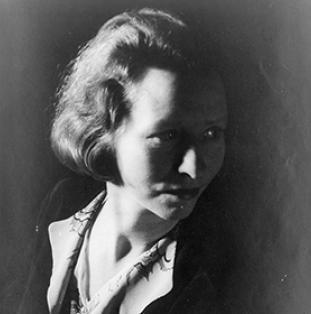
Edna St. Vincent Millay


Love is not all, it is not meat or drink
Nor slumber nor a roof against the rain;
Nor yet a floating spar to men that sink
And rise and sink and rise and sink again;
Love can not fill the thickened lung with breath,
Nor clean the blood, nor set the fractured bone;
Yet many a man is making friends with death
Even as I speak, for want of love alone.
It well may be that in a difficult hour,
Pinned down by pain and moaning for release 
Or nagged by want past resolution's power,
I might be driven to sell your love for peace,
Or trade the memory of this night for food.
It may well be. I do not think I would.

-Edna St. Vincent Millay

This is sonnet #30 from Millay's sonnet sequence of 1931, titled Fatal Interview.

Part of it was quoted at the beginning of Maggie Millner's Couplets, which shows good taste... 😉

I'm off in the Internet-free zone as this appears, where I might be, I don't know, observing frogs:


Thursday, March 10, 2022

Come Dance With Kitty Stobling (#ReadingIrelandMonth)


Come Dance With Kitty Stobling

No, no, no. I know I was not important as I moved
Through the colourful country, I was but a single
Item in the picture, the name not the beloved.
O tedious man with whom no gods commingle.
Beauty, who has described beauty? Once upon a time
I had a myth that was a lie but it served:
Trees walking across the crests of hills and my rhyme
Cavorting on mile-high stilts and the unnerved
Crowds looking up with terror in their rational faces.
O dance with Kitty Stobling, I outrageously
Cried out of sense to them, while their timorous paces
Stumbled behind Jove's page boy paging me.
I had a very pleasant journey, thank you sincerely
For giving me my madness back, or nearly.

-Patrick Kavanagh

Patrick Kavanagh (1904-1967) was an Irish poet. This sonnet was first published in 1958, and collected in book form in 1960. I don't know, I've always liked it. 😉 According to the editor, Antoinette Quinn, of The Collected Poems, Kitty Stobling is an invented name for Patrick Kavanagh's muse.


Thursday, February 24, 2022

Robert Fitzgerald on Dudley Fitts (#poem)


Dudley Fitts

for C.H.F.

The organist has closed his instrument
After recessional, and closed his book;
Counterpoint that his fingers undertook
Into the world of light has made ascent.
Airy agilities for perfection spent
Have quieted at last, but not the look
From the musician's eyes that will not brook
A blundering word upon a great event.
Far from New England's leafiness I write
In that land of the old latinity
And golden air to which at length he came,
My master and friend, as to his own birthright.
What farther land he found I hope to see
When by my change our evenings are the same.

-Robert Fitzgerald

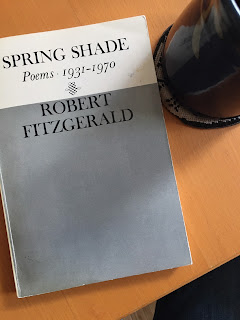
Robert Fitzgerald (1910-1985) is best known as a translator, largely from Latin and Greek. (Iliad, Odyssey, Aeneid, among others.) But he was a poet in his own right. Dudley Fitts, (1903-1968) was also a translator and poet. Fitzgerald had Dudley Fitts as an instructor at Choate as a teenager; they later went on to cooperate on several translations from Euripides and Sophocles. 

Dudley Fitts was also an organist.

C.H.F. will be Dudley Fitts' wife--or, I suspect, widow, though I'm not entirely sure when this poem was written--Cornelia Hewitt Fitts.

New Directions didn't feel the need to do anything fancy with the cover to sell this book, did they?


Thursday, January 13, 2022

Millay's To Love Impuissant (#poem)


To Love Impuissant

Love, though you riddle me with darts,
And drag me at your chariot till I die,--
Oh, heavy prince! Oh, panderer of hearts!--
You hear me tell how in their throats they lie
Who shout you mighty: thick about my hair
Day in, day out, your ominous arrows purr,
Who still am free, unto no querulous care
A fool, and in no temple worshiper!
I, that have bared me to your quiver's fire,
Lifted my face into its puny rain,
Do wreathe you Impotent to Evoke Desire
As you are Powerless to Elicit Pain!
(Now will the god, for blasphemy so brave,
Punish me, surely, with the shaft I crave!)

-Edna St. Vincent Millay

Take that, Cupid!

I came across this in reading Edmund Wilson's The Shores of Light. It first appeared in the magazine Dial in 1920, where Wilson read it. Millay would have been 28 at the time, and she lived on until 1950.

Wilson hadn't at that time met Millay, but knew her poetry and liked it and says he hoped maybe he would be the one she would fall in love with. It wasn't to be...

Thursday, March 11, 2021

Thomas Wyatt


Sonnet

Whoso list to hunt, I know where is an hind,
  But as for me, alas, I may no more.
  The vain travail hath wearied me so sore,
  I am of them that farthest come behind.
Yet may I by no means my wearied mind
  Draw from the deer, but as she fleeth afore
Fainting I follow. I leave off therefore,
  Since in a net I seek to hold the wind.
Who list her hunt, I put him out of doubt
  As well as I may spend his time in vain;
  And, graven with diamonds, in letters plain
There is written her fair neck round about:
  Noli me tangere, for Caesar's I am
  And wild for to hold, though I seem tame.

-Sir Thomas Wyatt

The very first sonnet in that Oxford Book of [English-language] Sonnets.

For the moment this is standing in for the fact that I finished rereading Hilary Mantel's Wolf Hall. While nobody really knows for sure who slept with whom in the 1500s, the hind of this poem is generally taken to be Anne Boleyn. Mantel certainly assumes this poem is about Anne, and alludes to it, though she also has Wyatt tell Thomas Cromwell he had not slept with her. In fact, for Hilary Mantel, Anne Boleyn is still a virgin the first time she sleeps with Henry.

If indeed this poem is about Anne Boleyn, then Caesar is Henry the VIIIth. Noli me tangere is 'Hands off!' or more literally, 'Don't touch me.'

I am intending to try to say something about Wolf Hall, which I reread recently because Brona is hosting a readalong.


Thursday, March 4, 2021

Petrarch


from Canzoniere, Number 7

Gluttony, sleep, pillows of idleness,
have banished every virtue from the world
whereby our nature, conquered by its habits,
has almost lost its way along the road;

so spent is every good light from the heavens
which should inform our human life that he
is pointed out as some remarkable thing
who would make water flow from Helicon.

Who wishes for the laurel, or for myrtle!
"In poverty and naked goes Philosophy,"
the masses bent on making money say.

You will have few companions on that road,
so all the more I beg you, noble spirit,
do not abandon your magnanimous task.

-Petrarch, tr. Mark Musa

Petrarch to a friend thinking of abandoning the writing of poetry.

This edition is from University of Indiana Press, translated and annotated by Mark Musa, with an introduction by Musa and Barbara Manfredi. This edition a bit overdoes the notes, I feel, but still, perhaps useful: the friend to whom this poem is addressed would seem to be unknown. Helicon is the spring sacred to the Muses. 

I also am not sure what Warhol's Liz Taylor is doing on the cover.

My knowledge of Italian from the 1300s is strictly limited, but I do think magnanimous is probably not well-chosen, though it fits his blank verse scheme. The Italian is magnanima, it looks alike, but magnanimous has a very specific meaning in English these days. At the very least I think the force of the original Latin words in magnanima would be much more present for Petrarch's audience, more than we sense in magnanimous now. Think 'great-souled.'

The Italian, for whom it's useful:

La gola e 'l sonno et l'oziose piume
ànno del mondo ogni vertù sbandita
onde' è dal corso suo quasi smarrita
nostra natura vinta dal costume

et è si spento ogni benigno lume
del ciel per cui s'informa umana vita
che per cosa mirabile s'addita
chi vol far d'Elicona nascer fiume.

Qual vaghezza di lauro, qual di mirto?
"Povera et nuda vai, Filosofia,"
dice la turba al vil guadagno intesa.

Pochi compagni avrai per l'altra via:
tanto ti prego più, gentile spirto,
non lassar la magnanima tua impresa.

Thursday, July 4, 2019

Poem For A Thursday: Lazarus


The New Colossus

Not like the brazen giant of Greek fame,
With conquering limbs astride from land to land;
Here at our sea-washed, sunset gates shall stand
A mighty woman with a torch, whose flame
Is the imprisoned lightning, and her name
Mother of Exiles. From her beacon-hand
Glows world-wide welcome; her mild eyes command
The air-bridged harbor that twin cities frame.
"Keep, ancient lands, your storied pomp!" cries she
With silent lips. "Give me your tired, your poor,
Your huddled masses yearning to breathe free,
The wretched refuse of your teeming shore.
Send these, the homeless, tempest-tost to me,
I lift my lamp beside the golden door!"

-Emma Lazarus

Browsing for something to post for Poem For A Thursday, I reminded myself of this. You likely know it, especially the famous lines from the sestet, but it is a pretty great poem. And a good one to remember, especially today.

And Emma Lazarus herself was the descendent of Jewish refugees to the United States.

Friday, June 7, 2019

Poem For A Thursday: du Bellay/Wilbur

Hubert contemplating a great journey
Happy the Man

Happy the man who, journeying far and wide
As Jason or Ulysses did, can then
Turn homeward, seasoned in the ways of men,
And claim his own, and there in peace abide! 
When shall I see the chimney-smoke divide
The sky above my little town: ah, when
Stroll the small gardens of that house again
Which is my realm and crown, and more beside? 
Better I love the plain, secluded home
My fathers built, than bold façades of Rome;
Slate pleases me as marble cannot do; 
Better than Tiber's flood my quiet Loire,
Those little hills than these, and dearer far
Than great sea winds the zephyrs of Anjou.

-Joachim du Bellay (tr. Richard Wilbur)

Joachim du Bellay was a French poet of the 1500s, one of the so-called Pleiades, seven French poets of that era. He was in Rome when this poem was written, serving as a secretary to his cousin, the cardinal Jean du Bellay.

Richard Wilbur was a wonderful American poet who passed away in 2017.

Here's the French text for those for whom it's useful... 😉

Heureux qui, comme Ulysse, a fait un beau voyage

Heureux qui, comme Ulysse, a fait un beau voyage
Ou comme cestuy-là qui conquit la toison
Et puis est retourné, plein de usage et raison,
Vivre entre ses parents le reste de son âge!
Quand reverrai-je, hélas, de mon petit village
Fumer le cheminée, et en quelle saison
Reverrai-je le clos de mon pauvre maison
Qui m'est une provence, et beaucoup davantage? 
Plus me plâit le séjour qu'ont bâti mes aïeux,
Que des palais romains le front audacieux
Plus que le marbre dur me plâit l'ardoise fine:
Plus mon Loire gaulois, que le Tibre latin,
Plus mon petit Liré, que le mont Palatin,
Et plus que l'air marin la douceur angevine.
-Joachim du Bellay

Jennifer at Holds Upon Happiness has a wonderful poem by Elinor Wylie this week. 


Thursday, May 9, 2019

Poem For A Thursday: Jeffers


Wonder and Joy

The things that one grows tired of--O, be sure
They are only foolish artificial things!
Can a bird ever tire of having wings?
And I, so long as life and sense endure,
(Or brief be they!) shall nevermore inure
My heart to the recurrence of the springs,
Of the grey dawns, the gracious evenings,
The infinite wheeling stars. A wonder pure
Must ever well within me to behold
Venus decline; or great Orion, whose belt
Is studded with three nails of burning gold,
Ascend the winter heaven. Who never felt
This wondering joy may yet be good and great:
But envy him not: he is not fortunate.
-Robinson Jeffers 

Robinson Jeffers was an American--and mostly Californian--poet who died in 1962. I always think of this as a poem for being outdoors, in the wilderness, maybe around a campfire. And have been known to declaim it under such circumstances.

I no longer recall where I first came across this poem. That's my poetry commonplace book above, a little tea-stained, in which this is written, a book now mostly obsolete, since poems I want to keep get typed into an HTML file and transferred to my phone. (Sigh. The modern world.) On the other hand, my handwriting is so appalling it may be all for the best.

Jennifer at Holds Upon Happiness is featuring a Pablo Neruda sonnet this week.

Thursday, March 14, 2019

Poem For A Thursday


I shall forget you presently, my dear,
So make the most of this, your little day,
Your little month, your little half a year,
Ere I forget, or die, or move away,
And we are done forever; by and by,
I shall forget you, as I said, but now,
If you entreat me with your loveliest lie,
I will protest you with my favorite vow.
I would indeed that love were longer-lived,
And oaths were not so brittle as they are,
But so it is, and nature has contrived,
To carry on without a break thus far,--
Whether or not we find what we are seeking
Is idle, biologically speaking.
-Edna St. Vincent Millay

I was going to pick a different Millay poem, but in looking at the history of Holds Upon Happiness posts, posts from before I stumbled upon her series, I find Jennifer had already picked my first choice. So I was forced indulge my reprehensible taste for cynical light verse instead...can Dorothy Parker be far away?

She's featuring a lovely Elizabeth Bishop poem this week.