Wednesday, April 4, 2018

Mount TBR Checkpoint #1 (Mount Ararat)

Yikes.

I have read five books toward my challenge level of 48 books for the year. I am way behind. I was behind on my first checkpoint last year and made it up, but I had read more books toward a lower mountain. There is some work to do. I say to myself, well, I was travelling, or I say, hmmm, February has only 28 days, so it's the shortest quarter of the year. Sigh. I am not convinced.

I haven't got enough letters to make a decent Scrabble word, alas. As for characters, the narrator Amelie of Pétronille is looking for a friend to drink champagne with and is amusing, so she might be a pleasant enough character, but we're not talking Anna Karenina or Nero Wolfe.

None of the book covers was particularly good, however the cover of Martin Amis' Money was memorably bad:


The good folks at Penguin must have decided that Martin Amis' name was enough to sell the book and so it was, I guess, though I got it for $3 used.

Back to the books!

Thanks to Bev at My Reader's Block for hosting this challenge. (Even if I'm not keeping up my end!)

Friday, March 30, 2018

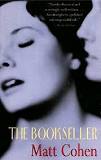
Book Beginning: Matt Cohen's The Bookseller


October light. The long thin knife of memory. October light gets right inside and gives you the little twist. Take an afternoon in late October, an afternoon when the last light of summer is slanting over the fallen leaves, the cold damp green of October grass. Today, for example.

...is the beginning of Matt Cohen's The Bookseller.

Matt Cohen was a Canadian writer--he died young in 1999--and he lived at the end of his life in my neighborhood. There's a series of outdoors signs to his memory only a few blocks from my home. I haven't read any Cohen, but I bought this a couple of years ago when my local indy bookstore was going out of business. (I tried! I did my best!) This one looked the most interesting. Paul Stevens, the narrator, sells used books and gets into a complicated love affair.

As someone who's spent almost all of his life on one Great Lake or another, I quite agree about the quality of light in fall, in late October. I'm a bit more positive than the narrator seems to be, but it got my attention.

This will serve as my 'read local' book for the Monthly Motif challenge. I think at this point it doesn't get much more local for me than Matt Cohen.

Book Beginnings on Fridays is a bookish meme hosted by Gilion at Rose City Reader. To play, quote the beginning of the book you're currently reading, give the author and title, and any thoughts if you like. 

Tuesday, March 13, 2018

Poem of the Cid

In my current quest to both read up about Spain and clear off my TBR pile, this volume did double duty. And if the question arises what book did I read this year that was longest on my TBR pile, this one will definitely be a strong candidate.

The Poem of the Cid (according to the back cover) was "written by an unknown Castilian around 1140, nearly a century after the birth of its hero." As the introduction points out, there could very well have been people alive who had known the Cid; still it feels like the world of legends.

Rodrigo Ruy Diaz de Bivar is the Cid, the successful military leader of a band of knights that fight the Islamic states at that time in the south of Spain; also he has to deal with enemies at court that poison his relationship with King Alfonso, and the beginning of the story finds him exiled.

I'm no expert and I'm a little reluctant to say much. I thought it was a good read as translated by the American poet W. S. Merwin. Only three points:

One, I was a bit surprised by the class elements in this. Rodrigo the Cid is aristocracy, but is looked down upon by the more high-born; when the king pushes his high-born enemies to marry the Cid's daughters, they're resentful and deliberately insult the Cid's daughters. I suppose it's a bit like Shakespeare's All's Well That Ends Well but his aristocratic enemies are much worse than Bertram is.

Two, it ends well for the Cid. Somehow that strikes me as unusual for a medieval epic. The Song of Roland, the Nibelungenlied, Beowulf all have a melancholic ending. The Cid is triumphant over his enemies. Be honorable, stick with your king, and things turn out well. That's the message.

And three, I read Guy Gavriel Kay's The Lions of al-Rassan about a year ago and quite liked it. I suppose it's not a surprise, but he really had the Poem of the Cid on his mind.  His Rodrigo Belmonte owes quite a lot to Rodrigo Ruy Diaz.

A well (?) - read book
Alas, what was it about books printed in the seventies? They finally get the acid out of the paper so the pages don't yellow, but they were still being cheap about bindings. I've had this for years (though not since its publication date of 1975) but it did not survive even one reading. Pity, because I liked it and I would otherwise keep it.