"...that indefinable smell of Berlin in March..."
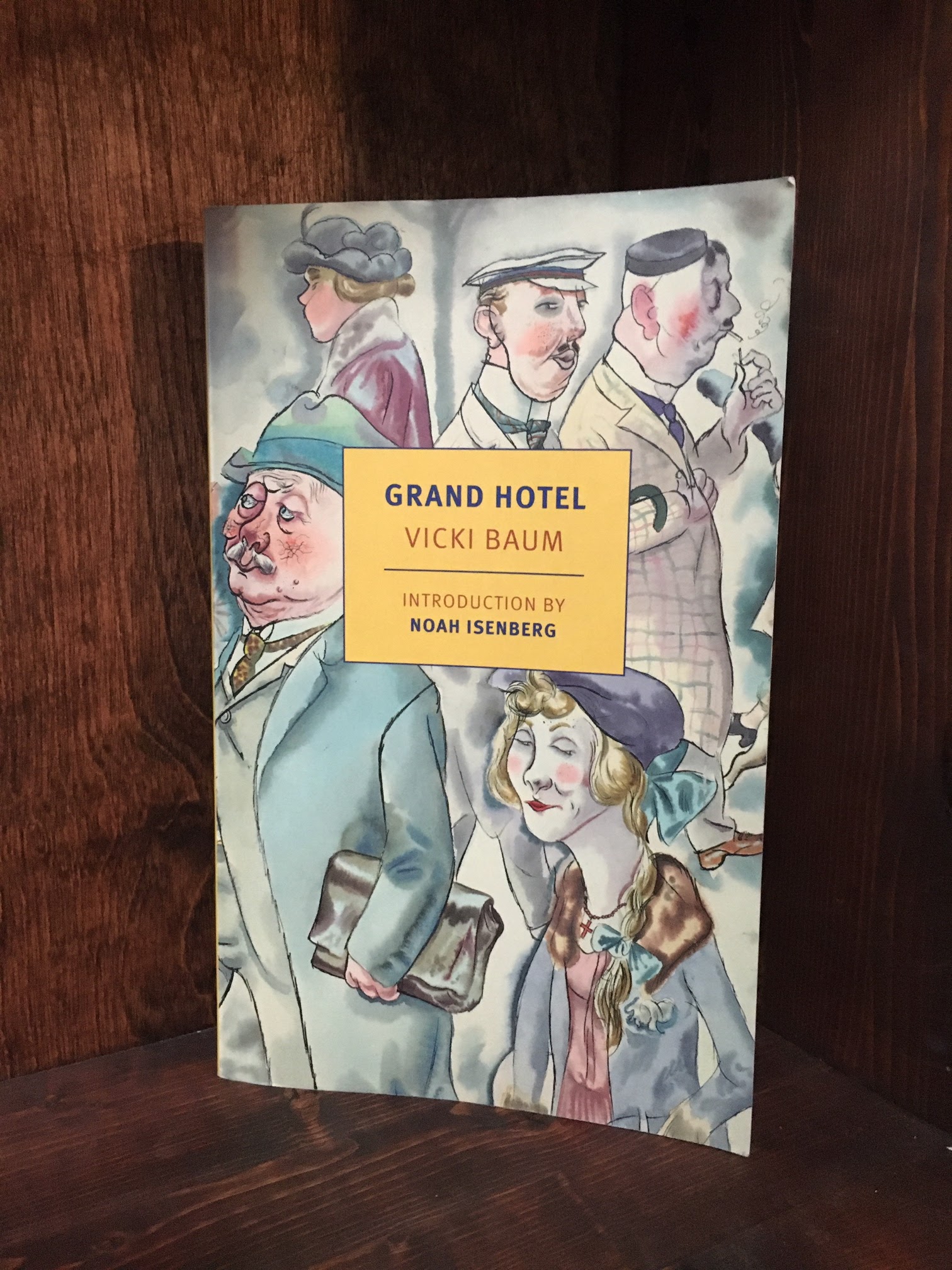
The novel--or the characters at least--affect a certain cynicism about love: the stenographer Flämmchen (what a name! Joan Crawford in the movie) tells Baron Gaigern, "True love? There's no such thing," and says of the sexual act, "It was like having a tooth filled by a singularly incompetent dentist." Gaigern himself is quite calculating about love, until, maybe, he isn't. The novel itself is less certain about that cynicism, but still a little cynical. Do unexpected characters fall in love? "No," says the third-person narrator. "Life is very far from producing such delightful surprises." Yet, even so, some hearts might be warmed.
Closer to the feeling of the novel is a concern for money. Kriegelein, the bookkeeper, says at one point, "Only with money can you begin to be a decent human being." Which room you're in, what clothes you wear, career choices and life choices. All the characters think about money, and a possible corporate merger is one of the main plot threads.
It ends--but no spoilers!--with a big scene that involves all the major characters, even if one has already left town. Very enjoyable.
It's the week of the 1929 Club, hosted by Kaggsy and Simon, and this is very much a 1929 book...


