Showing posts with label ClassicsClub. Show all posts

Sunday, July 5, 2026

Virginia Woolf's The Years

 
     "All talk would be nonsense, I suppose, if it were written down," she said, stirring her coffee.
     Maggie stopped the machine for a moment and smiled.
     "And even if it isn't," she said.
     "But it's the only way we have of knowing each other," Rose protested.
  
The Years was the last novel completed by Virginia Woolf during her life, and came out in 1937. It was the biggest financial success of her lifetime, though I have to imagine Mrs. Dalloway has sold more copies now. It's the story of the Pargiter family across three generations. Colonel Abel Pargiter, who served in India, and his wife Rose, are the parents of seven children; they form the core of the novel, though there are also cousins and family friends.
 
The novel is arranged in ten chapters, each labelled with a year. The longest are the first, 1880, and the last, 'The Present Day,' presumably 1936 or so, just before the novel appears. In 1880, we meet the seven children--Eleanor, Morris, Milly, Edward, Delia, Martin, and Rose. Mother Rose has been bedridden for years, and may finally be dying, and we see the children's (and husband's--who keeps a mistress) reaction to their mother's imminent death. Delia, the rebellious one, thinks it's time for her to go; others are more uncertain, but it's true Rose the mother doesn't have much of a life by then. At the end of the chapter, after a couple of dream-haunted days of collapses and rallies, she dies.
 
The other year chapters all take place on a single day, and are built around a meeting of family members. In 1891, it's the day of Parnell's death, the advocate for Irish Home Rule; Colonel Abel goes to visit his brother and sister-in-law for his niece Maggie's birthday. Abel, perfectly content in his imperialism, had no use for Parnell, but admires his sister-in-law's emotion at the death. In 1917 Maggie, now married to a Frenchman René (Renny), hosts Eleanor for dinner; German air raids on London occur that night. 1918 sees the day of the armistice; we follow Crosby, the Pargiter nurse and maid, now pensioned off, in the shortest chapter; she's annoyed by all the celebratory guns going off. In 'The Present Day', Delia and her husband Patrick, throw a party; all the surviving family members appear; there's a dance and dinner, and the party ends at dawn:
"The sun had risen, and the sky above the houses wore an air of extraordinary beauty, simplicity and peace."
So it's a family novel, but if so, it's quite different from what you might expect; it's impressionistic in its style, sketch-y, even, so long as you don't imagine that as a derogatory adjective. It's half the length of Buddenbrooks, for example, and avoids scenes that might have been expected: Charles, one of Maggie's children, dies in World War I, but we only learn that obliquely and long after the event.
 
Woolf conceived the novel after she'd given a lecture 'Professions for Women' in 1931:
"When your secretary invited me to come here, she told me that your Society is concerned with the employment of women and she suggested that I might tell you something about my own professional experiences. It is true I am a woman; it is true I am employed; but what professional experiences have I had? It is difficult to say." 
That set her to thinking and she initially imagined a novel-essay about the Pargiter family, a blend of essays about the status of women mixed with fictional episodes. That book was reconstructed after her death and is available, titled The Pargiters, but I haven't read it. In the end, though, the essays became her book Three Guineas and the fictional episodes became the novel The Years. That initial conception is still visible; in the first generation, there aren't many possibilities for women: Eleanor ends up looking after her widowed father, only becoming a great world traveler after his death; Kitty, a cousin, whom  Edward Pargiter loved and wanted to marry, marries instead a great lord and lives that lifestyle; Delia, in that first generation but somewhat younger, becomes a suffragette and is sent to prison for her agitation. It's only in the third generation that real professional possibilities open up for women: Peggy, Maggie's daughter, becomes a doctor, though it doesn't seem to make her very happy.
 
But a schematic essay-novel is not the novel Virginia Woolf has given us (though the idea of it definitely colors the criticism from what I've seen). Several of the male characters are also well-rounded, particularly Abel, the patriarch, and North, Peggy and Charles' brother, who also served in World War I, but then went to be a farmer in Africa.  Like any family novel of multiple generations, it's interested in the passing of time, and 1880 to 1935 are a time of great changes in England. In 1880, tea is being made with a spirit lamp and people travel in horse-drawn carriages; in 1936, the flash and circle symbol of the British Union of Fascists is graffitied on walls, and Eleanor discusses traveling by plane (though she doesn't).
 
It's also very good on family relations. As aunt and niece suggest in that opening quote, there's never perfect understanding or communication. During that final party, Edward, by then a professor, quotes Sophocles, but refuses to translate:
"It's no go, North thought. He can't say what he wants to say; he's afraid. They're all afraid; afraid of being laughed at; afraid of giving themselves away. He's afraid too, he thought, looking at the young man with a fine forehead and a weak chin, who was gesticulating too emphatically. We're all afraid of each other, he thought; afraid of what?"
And yet that's not the whole of the story either; again as that opening quote suggests, there is communication. North dances with a girl at the party, asks her for a date, she accepts. The next generation? Another way in which this would be unlike Buddenbrooks. This is a family with a decent amount of good will toward each other--not true of all families-- even if they don't always articulate it. The party is a success; it, and the novel, end with 'simplicity and peace.'
οὔτοι συνέχθειν, άλλα συνφιλεῖν ἔφυν

-Sophocles, Antigone, l.523 (Antigone speaking) 

And what was it Edward was unable to say in English? Elizabeth Wyckoff translates as, "I cannot share in hatred, but in love."
 
Nothing of Virginia Woolf's is exactly unknown or ignored. As I noted, you can easily enough find the novel The Pargiters she decided against giving us. But when I first was reading Virginia Woolf, thirty years ago or whatever, I read Mrs. Dalloway, To The Lighthouse, Orlando, the Common Reader series, etc., but it didn't occur to me to read The Years. I don't know what bit of received opinion I picked up that I didn't need to read it, but it was wrong. 
 
This was my spin book for Classics Club Spin #44, and a very good spin it was! 

Thursday, June 18, 2026

Quoting Walt Whitman


Tears 
 
Tears! Tears! Tears!
In the night, in solitude, tears.
On the white shore dripping, dripping, suck'd in by the sand,
Tears, not a star shining, dark and desolate,
Moist tears, from the eyes of a muffled head;
O who is that ghost? that form in the dark, with tears?
What shapeless lump is that, bent, crouch'd there on the sand?
Streaming tears, sobbing tears, throes, choked with wild cries,
O storm, embodied, rising, careering with swift steps along the beach!
O wild and dismal night storm, with wind--O belching and desperate!
O shade so sedate and decorous by day, with calm countenance and regulated pace,
But away at night as you fly, none looking--O then the unloosen'd ocean,
Of tears, tears, tears!
 
-Walt Whitman
 
I've been reading Virginia Woolf's Between the Acts. Miss La Trobe writes and organizes a pageant depicting the history of England at a country house. It was a benefit to fund new lighting for the local church. The pageant was held outside, and the weather mostly cooperated, but it did rain for a bit in the middle. (It is England after all.) After the pageant is over, one of audience says, "While we're waiting, tell me, did you feel when the shower fell someone wept for us all? There's a poem, Tears tears tears, it begins. And goes on Oh then the unloosened ocean...but I can't remember the rest."
 
More than I ever knew. I was somewhat surprised to discover it was Whitman. I almost titled this post Still More Weather, but I'm still a little uncertain whether the poem is about weather, comparing a storm to a person crying, or about a person, calm enough during the day, but crying in the night, and comparing that person to a storm on the shore. Not that one really needs to decide, of course.
 
Post coming soon-ish on Between the Acts
 

Sunday, May 17, 2026

It's Spin Win Sunday!

Hubert and Gumby are crowded round for the results:


It's number 9, which means Virginia Woolf's The Years. An excellent choice. The spin gods have a certain liking for Virginia--this is the second time they've landed on her; the first was A Room of One's Own

Do you know this one? Do I have a treat in front of me? 

Did you spin and did you get something good? 

Monday, May 11, 2026

Classics Club Spin #44


Mr. Dickens ponders the possibilities of chance.

Yes! It's time for a Classics Club spin. You know the rules, but what are the books I'm ready to read based on the dictates of chance? Well, it's actually a pretty quiet time for me over the next month and a half, so I'm allowing a few of the longer choices on this list. I also prioritized ones that weren't on my last list. So here we go...

1.) Willa Cather/Lucy Gayheart
2.) Elizabeth Gaskell/Wives and Daughters
3.) Sinclair Lewis/Elmer Gantry
4.) Jack London/The Iron Heel
5.) Edgar Wallace/The Four Just Men
6.) Simone de Beauvoir/The Mandarins
7.) Joachim Machado de Assis/Posthumous Memoirs of Bras Cubas
8.) Walter Pater/Imaginary Portraits
9.) Virginia Woolf/The Years
10.) Virginia Woolf/Between the Acts
11.) Andrei Bely/Petersburg
12.) Knut Hamsun/Hunger
13.) Halldor Laxness/Salka Valka
14.) Diogenes Laertius/Lives of the Eminent Philosophers
15.) W. E. B. Du Bois/The Autobiography
16.) Apollonius Rhodius/The Argonautica
17.) Nazami Ganjavi/Layli and Majnun
18.) Lucan/The Civil War
19.) Nikos Kazantzakis/Odyssey: A Modern Sequel
20.) John Ruskin/Unto This Last
 
I'm guessing the Kazantzakis and the Diogenes Laertius are the difficult ones on that list, but that's OK, I should have time. Which look good to you?
 
Sunday, May 17th, will reveal all. 

Saturday, April 4, 2026

George Gissing's New Grub Street (#CCSpin)

"Best or worst, novels are all the same. Nothing but love, love, love. What silly nonsense it is."

Gissing's novel of 1891 New Grub Street isn't that kind of novel. Or not exactly.

It's not that there isn't talk about love: that's Amy Reardon above and she has just been discussing with her friend Edith why it is divorce is so difficult in England at the time. She had loved her husband Edwin at one point, but that point is probably past, beaten down by the couple's unbearable poverty.

So what it is, is a novel of money, or more, the lack of it. Balzac is referenced several times as a novelist writing on the right kind of subject.

Edwin Reardon is a novelist, maybe aspiring to be what we would now call midlist. And as in Balzac, we learn about the finances; in this case what it takes--and what you can make--as a novelist. Reardon's biggest success brought him £100, an amount that is the barest minimum for a respectable existence in London for a year. That was for a so-called triple-decker, a novel of 200,000 words or 600-800 pages. Think Middlemarch in size. He needs to write one of those a year, and with no guarantee he'll meet the demands of the moment. He can't. Book reviewing? Articles for the magazines? These pay, but not well. Reardon writes a shorter novel with a sensationalist plot; he hopes to get £75 for it, but nobody is willing to buy.

Reardon is not the only writer; the novel is set among a circle of writers. There's Whelpdale: 

"And what's more, he made six guineas in the first fortnight; so he says, at all events. Now that's one of the finest jokes I ever heard. A man who can't get anyone to publish his own books makes a living by telling other people how to write!"

There's the nearly heroic Biffen, who lives in utter poverty in a garret, has (almost) no hope of marrying, toiling away on his novel: Mr. Bailey, Grocer. Nobody expects it to be read when he does finish it. Biffen himself says of it, "The result will be something unutterably tedious...If it were anything but tedious, it would be untrue." A nod to the naturalism still mostly in the future in English?

Amy Reardon's uncle Alfred Yule writes for the magazines with the aid of his talented daughter Marian. Someday he hopes to edit his own magazine. But until then:

"Seeing him in the title-lists of a periodical most people knew what to expect, but not a few forbore cutting open the pages he occupied." 

Dora and Maud Milvain (and mostly it's Dora) write religious stories for magazines; once their mother dies, and her annuity with her, that's what they will have to live on. Dora finds the work beneath her, but she is good at it. Her brother Jasper tells her: "Oh, if you can be a George Eliot, begin at the earliest opportunity."

The other main character is Jasper Milvain. He can't write 'stories' he says, but he sees making his way in the writing trade, via magazine articles, then an editorship:

"First of all, my qualities are not of the kind which demand the recognition of posterity. My writing is for to-day, most distinctly hodiernal. It has no value except in reference to to-day."

And he knows how to go about it: 

"Art must be practiced as a trade, at all events in our time. This is the age of trade."

Milvain is a goer, and it's he who largely makes the plot go. At the beginning of the novel Milvain and Reardon are friends, with the impractical, somewhat older Reardon, having had some success.  Milvain tries to get him to capitalize on it, but to no avail, with little effect other than increasing Amy Reardon's dissatisfaction. They don't become enemies, but their differing trajectories pull them apart.

Milvain meets Marian Yule (Amy Reardon's cousin) and falls in love with her. He certainly can't afford to marry when he first sees her, but if one or the other of them should ever come into enough money? But until then Milvain cannot acknowledge his love to anyone, scarcely even to himself. And maybe he could marry an heiress?

"You have to become famous before you can secure the attention which would give fame."

How to get around that conundrum? That's Milvain's problem and he intends to solve it. There's an inheritance to be sorted out, and there are marriages--though are any of them for love? (I'd say maybe one. If you've read it, what did you think?) Milvain's a bit of a monster, but not entirely. Milvain's advice to Reardon is sound, if unhelpful. When Mr. Bailey, Grocer finally does appear in print, Milvain does what he can to puff it.


The book was my Classics Club spin book, and I finished it last month, but I've only now gotten around to the post. (We went on vacation--though since I'm mostly retired, what exactly was I vacationing from? Blog posting, perhaps.) The novel is dark, but funny, complex, and engaging. It portrays a believable segment of society in interesting detail, different from today, but maybe not so different: even today midlist authors today scramble to publish articles, get grants, teach writing, all in order to achieve a bare middle-class existence, if that.

It's one of those novels I've known of for a long time, more read about than actually read, and I pulled off the shelf a couple of things I'd previously read to remind myself what they had to say.


Woolf's essay from the second volume of The Common Reader is a little harsh on Gissing, I thought, even though she remains positive. Her complaint is Gissing is a novelist who can only write about himself, unable to create other characters. Despite the current fashion for auto-fiction, I would agree if this were true it would be a valid complaint. Give me Middlemarch over Leaving the Atocha Station. But I don't feel it applies to New Grub Street. Edwin Reardon is no doubt a roughly accurate self-portrait of Gissing. But Jasper Milvain, Amy Reardon, Marian Yule, Dora Milvain are also rounded characters. Even a comic type like Whelpdale has some substance to him. (Woolf's may be a more fair charge for something like Gissing's The Private Papers of Henry Ryecroft.)

But she also writes, "Gissing is one of the extremely rare novelists who believes in the power of the mind, who makes his people think," and this is quite true. He's not Dostoevsky, but his characters do think, do have ideas, those ideas come into conflict, and nobody is tendentiously given the right answer ahead of time. Milvain is perhaps shallow, but Reardon is unable to function.

As for Orwell, I feel Gissing is all over him, and the index of my four-volume Collected Essays, Letters, and Journalism backs me up. Well, one would expect the author of Down and Out in Paris and London and The Road to Wigan Pier to be deeply interested in a novelist of poverty. But in 1948 Orwell was requested to write an essay on Gissing for the magazine Politics and Letters on the occasion of the reissuing of two lesser-known Gissing novels. The magazine went bankrupt before the article appeared, and Orwell had difficulty recouping his manuscript from the empty offices. The article only appeared in 1960, so it was Orwell's heirs who got paid, an ironic outcome Gissing would have darkly appreciated, I'm sure.

Orwell separates out what Gissing does from picaresque novels and other earlier types of narrative. 

"A true novel...will also contain at least two characters, probably more, who are described from the inside and on the same level of probability..."

The very criteria for which Woolf faulted Gissing. But Orwell writes:

"But merely on the strength of New Grub Street, Demos, and The Odd Women I am ready to maintain England has produced very few better novelists."

I think Orwell has the better of this argument.

From the last page of New Grub Street

"'Ha! Isn't the world a glorious place?'
'For rich people.'
'Yes, for rich people. How I pity the poor devils.'"
Maybe the world hasn't changed so much?  

Sunday, February 15, 2026

Fakhraddin Gorgani's Vis and Ramin (tr. by Dick Davis)

And may there be no love at all unless
It's like this love, and brings such happiness.
How fortunate the lover whose sweet fate
It is to live in such a favoured state--
Truly, this is the way that love should be,
Good fortune, followed by simplicity!
How many days I've loved and never seen
A joy like that of Vis and her Ramin... 

Vis and Ramin is a poetic romance written by Fakhraddin Gorgani in Persian around 1050 CE, commissioned by the commander of Isfahan. It's the earliest surviving version of a story that takes place at some point in Persia under the Parthian empire (247 BCE - 220 CE).

King Mobad is the ruler of all Persia; he meets Shahru, wife of Qaren, a minor king and mother of two sons. She's beautiful and he woos her, but she says, my lord, I'm married with two boys, this is inappropriate. But if ever I were to have a daughter, I promise her to you.

Vis was that daughter. 

Years later and Vis is now of marriageable age and at least as beautiful as her mother. Shahru ignores her promise (or maybe thinks it doesn't matter anymore) and Vis is married off to her brother Viru. 

The introduction assures us that sibling marriage was fairly common among Parthian royal families (as it was in Pharaonic Egypt for that matter). At any rate, the story doesn't treat it as icky as it is for us, or would be to the Muslim Gorgani for that matter.

But King Mobad hasn't forgotten that promise. Before the marriage with Viru is even consummated, he's launched a war against Qaren. Qaren is killed. Vis was happy enough to be pledged to Viru, but she has no interest in that 'old man' and writes to him:

And if Viru weren't mine, this doesn't mean
I'd love you or consent to be your queen.
You killed my father, he's in heaven now;
My self, my being, are from him so how
Could you become my husband or my friend? 

Vis tells her mother off for promising her away even before she was born. Viru manages a successful counterattack for a while, but it can't last: in the end she's married to Mobad. She's sent off to Marv, Mobad's capital.

She brings her nurse. Who happens to know a magic spell or two. And when Vis is no more impressed with Mobad upon seeing him, the nurse whips up a spell that makes Mobad impotent, and Vis' second marriage is also never consummated. 

Though well-done the nurse is a fairly stock figure in this sort of romance--Davis in his introduction mentions the nurse from Romeo and Juliet--and she's out to get Vis interested in and involved with somebody:

You've never truly slept with any man.
You've had no joy of men, you've never known
A man whom you could really call your own...
What use is beauty if it doesn't bless
Your life with pleasure and love's happiness?
You're innocent, you're in the dark about it,
You don't know how forlorn life is without it.
You'll have to decide just what it is.
 
Who's available? Turns out Mobad has a very much younger (and very much better-looking) brother named Ramin and he happens to have fallen in love with Vis as soon as he's seen her:
Half of my body burns, half of it freezes.
Has God created, and can heaven show,
An angel made like me from fire and snow?
Fire does not melt my snow, and who has seen
Snow coexist with fire, as in Ramin?
Ramin approaches the nurse to see what can be done and pretty soon Vis and Ramin are finding ways to meet in private.
 
Mobad is a king; he has responsibilities and has to leave town occasionally. Mobad goes hunting and Ramin falls ill; Mobad goes to war against the Romans, and Ramin, a prominent member of court and an important warrior in his own right, falls ill. Eventually Mobad catches on--a bit after everyone else in the kingdom--and leaves Vis behind in a locked castle on a mountain top with a guard outside the door. He comes back to discover that the well-guarded Vis has been enjoying herself with Ramin. Mobad is aghast. All these restraints and guards are like a belt:
A pretty belt's of no significance
Unless it's holding up some kind of pants!
Buckle your belt as tight as you can make it,
But with no pants to wear you're still stark naked!
The story quite often proceeds by speeches and similes; though it has a different tone and subject matter, think of something like the Iliad. Where the Iliad might compare its warriors to lions or boars, Vis and Ramin compares the lovers to cypresses or moonlight. The art is generally in the details of the comparison. About two thirds through Ramin and Vis break up, both half deciding this is the wiser course, each convinced by an adviser of dubious value--the nurse for Vis, a 'philosopher' for Ramin--but that doesn't last long, and pretty soon they're working their way back together. But it takes a hundred pages first of letters, then in-person speeches, full of recriminations and lament, self-justification and imprecations, and not much event. But it reads well in place, with lots of fun rhetorical flourishes.
But I am still the lover whom you knew
Whose like has never yet been seen by you;
My brightness has not dimmed, my musky hair
Has not turned camphor white yet with despair,
My clustering curls are still as black and tight,
My shining pearl-like teeth as strong and white,
My silver breasts as firm and opulent,
My cypress stature has not yet been bent.
My face was once the moon, it's now the sun
Admired throughout the world, by everyone!...
I never saw a man who didn't prize me,
So why should you reject me and despise me? 
Actually, in typing that out, it rather reminds me of The Song of Solomon.
 
The translation, by Dick Davis, is done in heroic couplets. He writes in the introduction that the original Persian is in couplets, and that the line length is close to that of iambic pentameter. The rhymes are mostly quite tame, and so don't draw attention to themselves, but he is capable of more extravagant rhymes, as in the comic outburst of Mobad quoted above. (significance/some kind of pants!) I'd earlier read Davis' translation Faces of Love, of three Shirazi poets, and quite liked it. This is different, and by design less showy at times, but still a lot of fun.
 
Given all that buildup I was prepared for a tragic ending. The story is compared to Tristan and Yseult, and is sometimes considered a source for it, and I thought it could very well end with them dying in each other's arms in some foreign country. But it doesn't. Vis and Ramin live long and happy lives and produce two sons. (Though it does end less well for some of the other characters.)  How they get to their happiness, I'll leave as an exercise for readers...😉But it does mean it's a suitably seasonable book for a post, except I hadn't quite finished it yesterday.
This is a post about Ramin and Vis,
The ancient Persian epic, blogged by Reese,
A romance written in ten thousand lines,
With love and danger for your Valentine's.
A book off my Classics Club list


Sunday, February 8, 2026

And the winner is... (Classics Club Spin #43)

 ...number 2!


That's George Gissing's New Grub Street for me. I've read Charles Dickens: A Critical Study and The Private Papers of Henry Ryecroft by him before and liked them both, especially Henry Ryecroft. (Wonderful and underread.) This is supposed to be his masterpiece. 'Trials and tribulations in the lives of literary hacks' says the back of the book.

Have you read it? Did you spin and did you get something good? 

Tuesday, February 3, 2026

Classics Club Spin #43


Once again it's time for a new Classics Club spin. The rules are here but that's old news & the fun is showing off a list of books, so...straight to that!

1.) Willa Cather/Sapphira and the Slave Girl
2.) George Gissing/New Grub Street
3.) Nella Larsen/Passing
4.) Sinclair Lewis/Elmer Gantry
5.) Jack London/The Iron Heel
6.) Jack London/Martin Eden
7.) Harry Mark Petrakis/A Dream of Kings
8.) Edgar Wallace/The Four Just Men
9.) Eudora Welty/Delta Wedding
10.) Mikhail Bulgakov/Heart of a Dog
11.) Simone de Beauvoir/The Mandarins
12.) Joachim Machado de Assis/Posthumous Memoirs of Bras Cubas
13.) Benito Perez Galdos/That Bringas Woman
14.) Robert Walser/Jakob von Gunten
15.) John Ruskin/Unto This Last
16.) R. L. Stevenson/An Inland Voyage
17.) Apollonius Rhodius/The Argonautica
18.) Luis Vaz de Camões/The Lusiads
19.) Nezami Ganjavi/Layli and Majnun
20.) Gotthold Lessing/Nathan The Wise
 
These are all from my current Classics Club list. Which look good to you?    

Monday, October 20, 2025

Ford Madox Ford's Parade's End (#1925Club)

"And Christopher was as obstinate as a hog. For that Mark did not blame him. It was a Tietjens job to be obstinate as a hog." [800]

The protagonist of Parade's End is Christopher Tietjens and indeed he's pretty obstinate. That's Mark, his older brother, musing above, and maybe it takes one to know one, both as a Tietjens and as an obstinate hog... 

Parade's End is a series of four novels that takes place from 1912 until some point after the end of World War I. Christopher Tietjens comes from a wealthy family from the North of England--he's one of the Tietjens of Groby--and in 1912 he's a highly valued analyst in a department of statistics. But he's married Sylvia Tietjens (neé Satterthwaite) and she's a bad 'un.

She'd set her cap at him because she thought she might be pregnant by Colonel Drake and needed a father; she's beautiful; Tietjens falls; he's never quite sure the son she bears is his. (Nor is anyone else: Sylvia herself, various other Tietjens, the reader.) At the beginning of the first novel Some Do Not Sylvia is on the continent, and has just left a subsequent lover Perowne, and intends to ask Tietjens to take her back, which he does.

In the meantime, though, Tietjens, in a meet-cute episode, has discovered Valentine Wannop, a suffragette. He's golfing; she's disrupting the golf course as a protest, and Tietjens rescues her from arrest. He ends up driving her home in the middle of the night and they start to fall in love. Nothing happens at that time.

And nothing happens for quite a while. Tietjens gets himself into the army; we next see Tietjens in 1917 and he's back in England; a shell had exploded near him in France and he'd woken up in hospital not even knowing his name. He meets Valentine again in London, but nevertheless he's determined to get back to France.

"The gods to each describe a different lot:
Some enter at the portal. Some do not!" [24]
This couplet is first quoted in the context of the landed Tietjens' relation to his poor Scottish friend MacMaster. But just before Tietjens' return to France, which both he and Valentine assume is a death sentence, he asks her to sleep with him, and she thinks, that while she's not that sort of girl, "Some do!"
 
But, in fact, they do not. 
 
The second novel No More Parades is set in France. Tietjens is a very capable officer in Transport. New levies appear and need to be moved to the front; there's a grimly comic bit about trying to move Canadian troops into position to go over the top, presumably largely to be killed. Tietjens' position isn't on the very front, but it's dangerous enough; his messenger Morgan dies in his arms, killed by a German shell. 
 
At the same time Sylvia (and aspirants to Sylvia's favours) are out to drag down Tietjens. It's widely believed that Valentine is Tietjens' mistress, and Sylvia contributes to the rumours which get back to, and are believed, by Tietjens' commanding officer General Campion, his older brother Mark, even by his father, so much so that his father commits suicide. (Or does he?) One of those aspirants, working for a bank, delays deposits to his account and hastens check processing so Tietjens' checks bounce, a court-martialable offence at the time.
 
What makes Sylvia so miserable to her husband? She perceives that Tietjens has fallen out of love with her, though he's too honourable to ask for a divorce, or even to sleep with the girl he loves (at least for a long while), and she's still half in love with him. She also just craves excitement:
"And then there is the boredom. I know it; one is bored...bored...bored!" [41]
A sentiment she repeats several times.  She gets to the battle lines in France, where she's not suppose to be and gets Tietjens to spend the night with her in a hotel, but leaves the door open so Perowne can come in.
"If what's distressing you is having to tell me that you believe Major Perowne came with my wife's permission I know it's true. It's also true my wife expected me to be there. She wanted some fun; not adultery." [498]

Not my idea of fun, but that's who Sylvia is. Tietjens not unreasonably attacks this intruder, but it's Tietjens who gets in trouble for it.

Tietjens, on the other hand, is often irritating in a priggish way:

"His private ambition had always been for saintliness...a saint of the Anglican variety..." [200] 

Tietjens' reputation is so compromised by the end of the second novel that Campion can do nothing but promote him into a position that actually is the front lines.

The third novel A Man Could Stand Up-- starts with Valentine on Armistice Day 1918. Noisy celebrations are starting; Valentine, who's teaching at a girls' school, can't control her students, when she learns (along with a lot of misinformation) that Tietjens has survived the war and is in London. She goes to see him, but does he want to see her? 

In fact he does, and once again they think about sleeping together, but rescuing Valentine's drunk brother gets in the way. 

The novel then moves back in time to early 1918 on the Western front; the British army is close to collapse and nobody quite recognizes that the German army is equally close to collapse. (The Russians have collapsed, which just might give a second wind to the Germans.) 

Tietjens on the front is more concerned with his personal issues: what to do about his family? His son (if the son is his)? Valentine? His brother Mark and his father were too ready to believe the slanders about Tietjens and he can't forgive them (see the quote at the top) and Tietjens who would inherit the family estate because Mark has no children decides to refuse it and make his own way.

The fourth novel The Last Post resolves most of the issues but I won't tell you how they're resolved... When Graham Greene caused the series to be reprinted as one volume in 1963, he said The Last Post was a 'disaster' and simply left it out. That's a little strong, but I did think it was the weakest.

The novel is often quite funny, despite the darkness of its themes, both political and personal. It's also stylistically interesting, with a lot of it in stream of consciousness, an early, though hardly the first, example of the technique. There was a BBC adaptation with Benedict Cumberbatch as Tietjens, which I haven't seen but now want to. Cumberbatch could do a good Tietjens, I think, both pompous and appealing; after all he was Sherlock Holmes.

It's the 1925 Club! 


Actually only the second novel No More Parades is from 1925; the whole was issued from 1924-1928. Thanks to Kaggsy and Simon for hosting!


Sunday, October 19, 2025

Spinwinner!


...which for me is Dawn Powell's A Time To Be Born. I've liked the two novels of hers I've read previously and apparently this is sometimes considered her best. Looking forward to it!


Thursday, October 16, 2025

Classics Club Spin #42


It's time for a spin, and it's time for me to do a spin, since I was haven't managed to sign up for the last couple. The organizing post for spin #42 is here, but you probably know all that so let's go straight to the list of books:

1.) Apollonius Rhodius/Argonautica (3rd century BC)
2.) Lucan/On the Civil War (Pharsalia) (65 AD)
3.) Luiz Vaz de Camões/The Lusiads (1572)
4.) Alexandre Dumas/The Black Tulip (1850)
5.) John Ruskin/Unto This Last (1860)
6.) Charles Darwin/The Voyage of the Beagle (1860)
7.) Robert Louis Stevenson/An Inland Voyage (1878)
8.) Wilkie Collins/The Fallen Leaves (1879)
9.) Gottfried Keller/Green Henry (1879) 
10.) Machado de Assis/Memoirs of Brás Cubas (1881)
11.) Knut Hamsun/Hunger (1890)
12.) Andrei Bely/Petersburg (1922)
13.) Mikhail Bulgakov/Heart of a Dog (1925)
14.) Theodore Dreiser/An American Tragedy (1925) 
15.) Sinclair Lewis/Elmer Gantry (1927) 
16.) Katharine Anne Porter/Pale Horse, Pale Rider (1939) 
17.) Dawn Powell/A Time to be Born (1942)
18.) Eudora Welty/Delta Wedding (1946)
19.) Harry Mark Petrakis/A Dream of Kings (1966) 
20.) Robert Pirsig/Zen and the Art of Motorcycle Maintenance (1974)
 
It's been since last year I signed up for a spin, and even then, though I read the book--Statius' Thebaid--I never managed to blog about it.
 
There's a couple of scary chunky numbers on this list: The Voyage of the Beagle, An American Tragedy, Green Henry, but there's two months so that should be OK. I'm particularly keen to read An American Tragedy this year for its hundredth birthday; there are a couple of 1925 challenges on. But it also feels like a political moment in history, and Unto This Last or Elmer Gantry would be fitting.
 
This Sunday will reveal all. Which look good to you? 

Monday, August 18, 2025

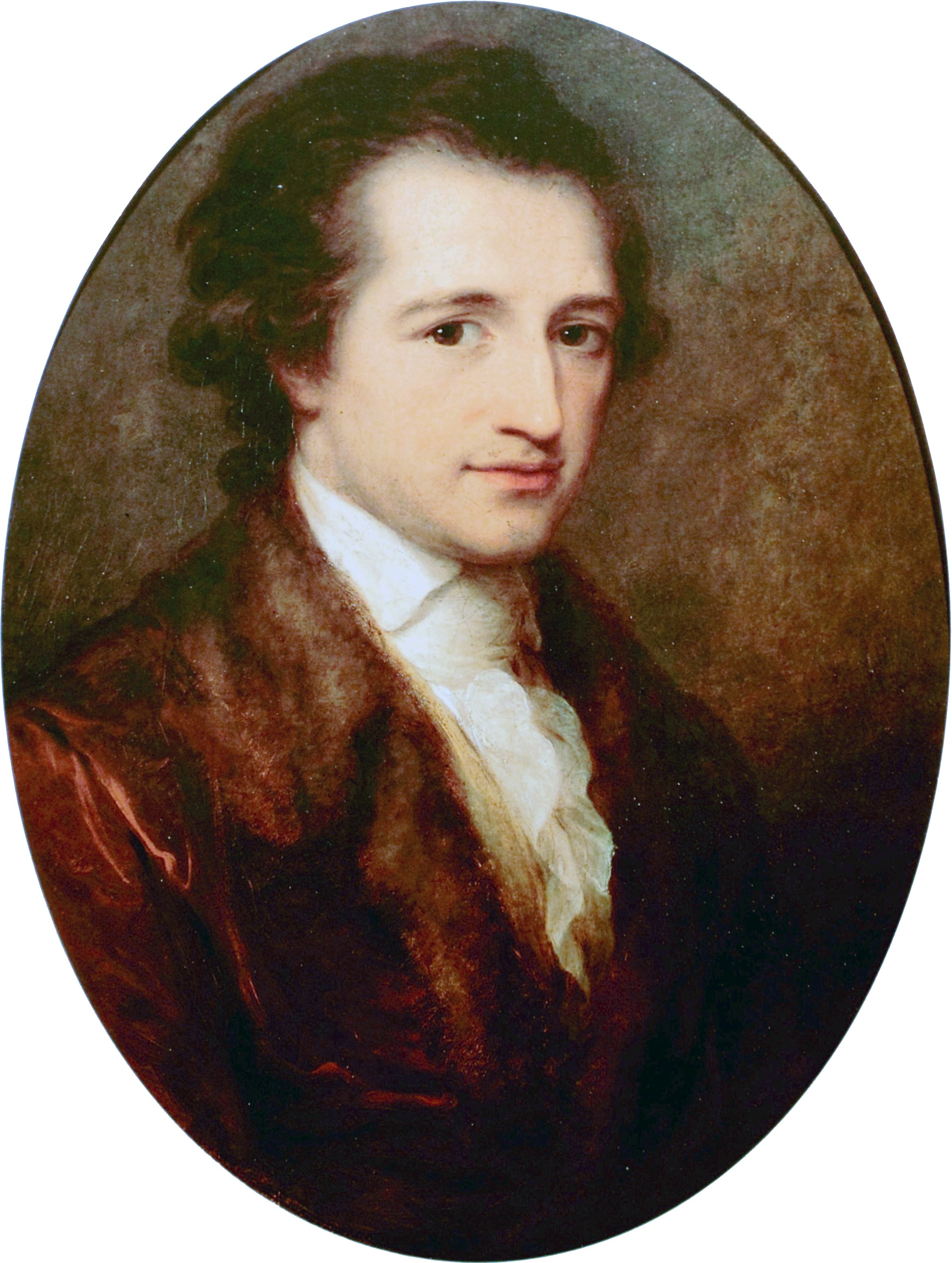
Goethe


"...he is, surely, among all the truly great writers of this world, the least read in the English-speaking world."
-A. N. Wilson, Goethe: His Faustian Life
 
The owl stands tall.

Is that true? It might be! But I've been trying to do my part.
 
Biography 
 
Johann Wolfgang Goethe (not yet von Goethe) was born to a upper middle class family in Frankfurt in 1749; he went to Weimar in 1775 for what was supposed to be a visit to the duke, Karl August; it became his permanent residence until he died.
 
Karl August invited him because at 26 Goethe was already celebrated. His first play, Götz von Berlichingen, was a hit in Germany, but his novel, The Sorrows of Young Werther of 1774, made him famous across Europe. Napoleon, in the middle of his wars, stopped to meet Goethe, and claimed to have read Werther six times.
 
When Goethe shows up in Weimar, Karl August has just turned eighteen and taken over after his mother's regency. He's still a bit of a wild child, and Goethe's first role in Weimar is to provide amusements for the young duke. The most innocent of these is Goethe teaching Karl August how to ice skate; how un-innocent these get is still argued about, but Karl August was pretty much the whole of his life a notorious womanizer. Nevertheless, Karl August's formerly reigning mother, Anna Amalia, is also fond of Goethe, so much so that it was sometimes rumored that Goethe had an affair with Anna Amalia, though neither of those biographies shown above believed it true.
 
In time both Goethe and Karl August steady down, and Goethe becomes a useful privy councillor to the Weimar duchy. The finances there are appalling--Goethe improves them: he regularizes taxation and reforms (shrinks) the army; his attempts to revive an abandoned silver mine in the territory are less successful. He serves on a commission to improve the roads, which is supposed to help the economy as well.
 
But of course he's Goethe, and anyway Anna Amalia was interested in making the duchy a cultural center. Goethe takes over the official court theater, writing plays, directing, acting, but also bringing in other talent, mostly notably Friedrich Schiller in 1787. Goethe and Schiller, though not immediately, become great friends, deeply influential on each others' work, until Schiller's death from tuberculosis in 1805.

There had long been a university at Jena, fifteen or so miles from Weimar, but still in the duchy. It's Goethe who brings in the scholars that make it one of the great German universities. Not just Schiller, but also Fichte, Schlegel, Hegel. I read a book about that a couple of years ago.
 
Goethe travels--but not much really. Switzerland, back home to Frankfurt (though not often). Most famously to Italy, twice: it's the first trip (1786-1788) that is the most important; he spends a long period in Rome, living somewhat incognito, though he also gets to Naples, where he meets William and Emma Hamilton.  He goes a second time to Venice to escort Anna Amalia back to Weimar after her own Grand Tour.
 
After his first trip to Rome he meets Christiane Vulpius, the daughter of impoverished pastor who comes to him seeking help for her brother. She's not the sort of woman somebody like Goethe should marry, but they start living together. She bears him several children, though only the eldest, named August in honor of the duke, survives to adulthood. The court is horrified (well, not the duke himself, who only suggests Goethe keep Christiane out of sight) but not, as it turns out, Goethe's mother, who though she scarcely meets Christiane, likes her. After the battle between Napoleon and Prussia on the outskirts of Jena in 1806, Christiane famously defends Goethe's house from the victorious marauding French troops, and Goethe decides, propriety be damned, I'm marrying that woman. And does.
 
He writes, you know, some famous works. Not just Werther and Faust, both of which I've read, though not recently, but also The Roman Elegies, Dichtung und Wahrheit, which is his autobiography until his move to Weimar and a collection of poetry, West-Eastern Divan.
 
Goethe is ennobled, becoming von Goethe, and dies in 1832 at the good age of 82. But this is after his duke, his great friend Schiller, his wife, and his son August, the only child of his to survive until adulthood have all died. (His daughter-in-law and his grandchildren were alive at his death.)
 
Biographies

OK, you may not really need to read three biographies of Goethe, but that's what I did. The first one I finished was by A. N. Wilson, Goethe: His Faustian Life. Wilson is British, a prolific man of letters, who admirably makes his way by writing--with panache--serious books for adults. This was a good biography of Goethe. Wilson was occasionally perverse. Was Goethe a drunk? Hmm, possibly. No doubt he drank more than was good for him. Was Goethe bisexual? Nobody else seems to think so, and the one poem from the Venetian Epigrams which Wilson quotes and might suggest it, is pretty clearly written in imitation of ancient models. The amusing thing about Wilson's biography is the emphasis he puts on how Goethe would have been a nobody had he not wrapped everything up at the end of of his life. Maybe not entirely true? There was already Werther and the first part of Faust. It is true the second part of Faust, Dichtung und Wahrheit, and the ending of Wilhelm Meister were only completed in the last years of his life, but this did feel a bit like Wilson (now 74) writing more about himself than Goethe.
 
Still, I'd cheerfully recommend this biography of Wilson's--it's recent, 2024, it's punchy, it's got the facts--except there's a better choice. So unless you're reading three...
 
The second one I finished was Goethe's autobiography. I've been calling it by its German title, Dichtung und Wahrheit, which is usually translated as Poetry and Truth, but I read it in a 1897 translation by John Oxenford which titled it Truth and Fiction. (You can find it on Project Gutenberg.) It covers the years from Goethe's birth until his move to Weimar at age 26. It's pretty fascinating. Goethe is interested in education--Rousseau was in the air, as weird as he is, Julie and Emile, and gets a discussion in Dichtung und Wahrheit--and the book is about Goethe's education, not just in schools, but in life. Was he going to be a lawyer? Or was he going to be a poet? I thought Oxenford's translation of the prose was good; when Goethe was trying to convey something that depended on a particular German word, Oxenford handled it with particular sensitivity. But Goethe is also a poet, and has a habit of embedding poetry in his prose narratives, and, let us just say, it may have been as well Oxenford did not use the word Poetry in his title of the book. A fascinating work, covering a bit over a quarter of Goethe's life, but I would hope there's a better translation out there.
 
The last one I finished is the great one. Rüdiger Safranski's Goethe: Life as a Work of Art was celebrated when it came out in Germany in 2013, and was translated into English by David Dollenmeyer in 2017. Dollenmeyer's translation strikes me as superb and he has no need to avoid the word Poetry: 

Wanderer's Night-Song
Peace lies over
All the peaks.
In all the trees
You sense
Hardly a breath;
The little forest birds fall silent.
Wait, and soon
You too will rest.
 
-Goethe (tr. David Dollenmeyer)
 
I featured this in a couple of other translations a few weeks ago after finishing Wilson's biography. I now think I like Dollenmeyer's version best. 
 
Safranski, too, has a thesis; it's suggested by his subtitle, Life as a Work of Art. He writes, "Goethe returns from Italy with the idea of being a sovereign human being," as if what made Goethe important was his self-actualization, reaching the top of the Maslow pyramid. He probably did reach the top of the pyramid. Still I more think what makes Goethe interesting is that he wrote a bunch of great books. (See above.)

One amusing thing I learned is that Goethe thought the portrait of him by Angelica Kaufmann was too flattering and didn't really look like him. Too bad. I speculated in my post on Wilhelm Meister's Apprenticeship that Wilhelm's adventures were helped because he looked the Goethe of this portrait. Maybe even Goethe didn't look like the Goethe of this portrait...
 
Anyhoo... Safranski's is the biography of Goethe to read at the moment as far as I can tell, and in Dollenmeyer's translation for those of us who aren't up to reading it in German.
 
This post is now in serious tl;dr territory and I didn't even get to those two books of poetry. Maybe I'll come back to Roman Elegies at some point. So why all this Goethe?  (And the other German things on the blog this year: Heinrich Heine, Joseph Roth, Stefan Zweig.) We've got a trip planned to Germany at the end of September--Yay!--and we're concentrating on the southeast, Weimar, Leipzig, Dresden. 
 
Do you like immerse yourself in a place in advance by reading? 

Monday, October 21, 2024

The Winner Is... (Classics Club Spin #39)


This spin's winning number was 3.

Which means for me, it's the Thebaid, Statius' Latin epic about Thebes, Odysseus, Eteocles, Polynices, Ismene, and Antigone. It's in twelve books (like the Aeneid) which is about 350 pages in my edition, translated by Jane Wilson Joyce.

I read Joyce's introduction (very good) to get started. Not much is known about Publius Papinius Statius. He was born between 40 and 50 A.D. in Naples and probably died before 96 A.D. His father was also a poet, though in Greek, and taught Greek and rhetoric. One of the father's pupils was Domitian, the future emperor. The younger Statius in addition to the Thebaid, wrote occasional poems collected as the Silvae, and had started an epic about Achilles when he died.

Statius was more read in the Middle Ages than he was in classical times (or now, I suspect,...😉). Dante was a fan, and Statius is an important character in the Purgatorio section of the Divine Comedy. Joyce's introduction was enthusiastic and I'm feeling fired up.

And so I'll be reading this by the 18th of December.

Did you spin? Did you get something fun?

Sunday, October 13, 2024

Classics Club Spin #39


It's time for another spin! The rules are here. Mine's an all-over-the-map kind of list, and the only organization is chronological:

1.) Apollonius Rhodius/Argonautica (3rd century BC)
2.) Lucan/On the Civil War (Pharsalia) (65 AD)
3.) Statius/Thebaid (90s AD)
4.) Luiz Vaz de Camões/The Lusiads (1572)
5.) John Ruskin/Unto This Last (1860) 
6.) Elizabeth Gaskell/Wives and Daughters (1864-1866)
7.) Robert Louis Stevenson/An Inland Voyage (1878)
8.) Machado de Assis/Memoirs of Brás Cubas (1881)
9.) Benito Pérez Galdós/That Bringas Woman (1884)
10.) Knut Hamsun/Hunger (1890)
11.) R. Austin Freeman/The Red Thumb Mark (1907)
12.) E. Philips Oppenheim/The Great Impersonation (1920)
13.) Andrei Bely/Petersburg (1922)
14.) Mikhail Bulgakov/Heart of a Dog (1925)
15.) Dawn Powell/A Time to be Born (1942)
16.) Eudora Welty/Delta Wedding (1946)
17.) Halldor Laxness/The Fish Can Sing (1957)
18.) Harry Mark Petrakis/A Dream of Kings (1966)
19.) Ismail Kadare/The Siege (1970)
20.) Robert Pirsig/Zen and the Art of Motorcycle Maintenance (1974)
 
I'm kind of keen on 1, 4, or 19 at the moment, but really I expect any of them to be a good read--I didn't put anything terribly challenging on the list. (I think?) Next month there's a Norwegian literature event so 10 would work, too.

Which have you read? Which look good to you?

Wednesday, September 18, 2024

Anna Seghers' The Seventh Cross (#ccspin)

"The National Socialist state relentlessly prosecutes anyone who commits an offense against the national community; it protects that which is worth protecting; it punishes those who deserve punishment; it destroys that which should be destroyed."

Or so says Commandant Fahrenberg of the Westhofen concentration camp. But he's just had a breakout of seven prisoners from his camp, and it's a big black eye to his leadership. Will he recapture them all? Is the National Socialist state that powerful?

No. We already know from the prologue that one (but only one) will make it to freedom. It's a novel with thrills and narrative drive. But not just that.

We spend most of our time with George Heisler, the one who makes it safely to Holland, but we see all seven as they attempt to escape the Nazis. One is killed just outside the camp boundaries, another is betrayed, a third despairs and turns himself in, the next to last to be found can think of nothing but revenge against the fellow politician who framed him.

But it's not only the escapees who feature in the novel: it's also the people who help him and hinder him, family, friends, strangers. Also the SS and the SA troopers who pursue him. He escapes one checkpoint because he's so beaten down by his years in the concentration camp he no longer matches the picture that's distributed. George steals a gardener's prized jacket to cover up his prison clothes; the gardener  at first wants George caught, but then starts to think of George as 'his' escapee and lies about the jacket when it's found, sending the searchers astray. In a letter of 1938, cited in the afterword, Seghers writes of her novel that it's 'a tale, then, that makes it possible to get to know the many layers of fascist Germany through the fortunes of a single man.'

That one man escaped gives the resistance, both inside the prison and out of it, hope. It only seems that that the state is all-powerful whatever Fahrenberg may say in that opening quote. It's not true. A childhood friend Paul Roeder, one of the key figures in helping George to escape says, "But they are not the slightest bit all-knowing. They only know what you tell them." And you don't have to tell them anything.

Anna Seghers herself was arrested in 1933 after Hitler came to power. She'd married a Hungarian Communist and was involved in Communist organizations. Once the Nazis felt solidified in their power, she was released, but she was of Jewish extraction and felt it safer to leave the country, first for France and then later for Mexico. Her mother was killed in a concentration camp in 1942.

This novel was written in 1938-9, and is set in 1937 or early '38. [Heisler while on the run picks up a discarded newspaper which discusses the battle of Teruel in the Spanish Civil War.] The novel came out with a German emigré press in Mexico in 1942, but was quickly translated into English and became a Book-of-the-Month Club main selection. In 1944 it was made into a movie with Spencer Tracy as George, and Hume Cronyn earned a Best Supporting Oscar nod for his role as that friend. 

A couple of years ago I read Seghers' subsequent novel Transit and thought it also was very good. Both novels turn around a suspenseful plot of escape from the Nazis, but both novels also have ambitions larger than simple suspense.

Seghers was nominated several times for the Nobel Prize, though she didn't win, and based on the now two novels I've read of hers, I'd have to say she would have been a good choice. After World War II, she returned to Germany, eventually pitching up in East Germany, where she died in 1983.

It was my spin book, and while I thought I might read it last month for Women in Translation month, I didn't get around to it. But it was pretty great whenever I read it. Did you join in the Classics Club spin this time? Did you have a good read?


Wednesday, August 28, 2024

George Bernard Shaw's Major Barbara (#ClassicsClub)

Wendy Hiller as Major Barbara from the 1941 movie poster

Major Barbara is a play by George Bernard Shaw first performed in London in 1905. It centers around the Undershaft family.

Lady Britomart Undershaft: (The matriarch of the family) 

"You know how poor my father is: he has barely seven thousand a year now; and, really, if he were not the Earl of Stevenage, he would have to give up society."

Stephen Undershaft: (The son) 

"He knows nothing and thinks he knows everything. That clearly points to a political career."

Sarah Undershaft: (The older daughter) 

"I dare say it's very wicked of papa to make cannons, but I don't think I shall cut him on that account."

Charles Lomax: (Sarah's fiancé, and the comic relief)

"Oh, I say."

Barbara Undershaft: (The younger daughter)

"Really, Barbara, you go on as if religion were a pleasant subject. Do have some sense of propriety."

Adolphus Cusins: (Barbara's fiancé, and a Professor of Greek)

"Cusins is a very nice fellow, certainly; nobody would ever guess he was born in Australia..."

Andrew Undershaft: (The father, estranged from the family at the start)

"UNASHAMED."

The first act takes place as Lady Britomart is explaining to Stephen and her other children that, because they need money, she has invited their father to the house again and they're going to have to be nice to him. That's even though he makes munitions and sells them to all comers. (Their latest offering is a new 'aerial battleship'.)

Undershaft Industries has a tradition where the current Undershaft adopts an impoverished foundling and leaves the business to the adoptee. Obviously none of the Undershaft children are foundlings, and despite what their mother might say, not really impoverished either. Lady Britomart is determined, though, that the tradition can end.

Barbara, the most spirited of the Undershaft children, has recently joined the Salvation Army and for her diligence and zeal has been promoted to Major. She's determined to make people better, morally. She's especially put off by her father's manner of making money. He challenges her to come see his factory, and she agrees if he comes to her Salvation Army outpost.

The second act is at the Salvation Army camp. We see Barbara attempting save the wretched poor of the neighborhood, but can they be saved? In any case saving will certainly require money, which her father rather impishly offers. (And is refused.)

The final act is at the Undershaft Industries factory, which is set up as a model town on liberal principles rather like David Dale's New Lanark:

 
Who is it that actually wants and gets the factory in the end? 
 
I find this one of Shaw's sprightliest plays, but it is perhaps a bit one-sided in its arguments even for Shaw. But there's plenty of good banter in it. So...some quotes! [If my choice of quotes leans a little heavy on Greek as a subject, well, it's true I was a Classics major back in the day...]
-Don't call me Biddy. I don't call you Andy.
-I will not call my wife Britomart. It is not good sense.
-Can a sane man translate Euripides?
-No.
-I know the difference between right and wrong.
-At twenty-four, too!
-Pooh, professor. Let us call things by their proper names. I am a millionaire, you are a poet, Barbara is a savior of souls.
-Greek scholars are privileged men. Few of them know Greek, and none of them know anything else.
-After all nobody can say a word against Greek: it stamps a man at once as an educated gentleman.
-You can not have power for good without having power for evil, too.
And that's the last of the books from my first Classics Club list. Yay! Only six and a half years into a five-year challenge...

 
Time for a new list?

Sunday, July 21, 2024

And the Winner Is... (Classics Club Spin #38)


Anna Seghers' The Seventh Cross

Seven escapees from a Nazi prison on the run across Germany during World War II.

The novel came out in 1942 with a German press in Mexico for exiled writers and was translated into English shortly after. There's a 1944 movie version with Spencer Tracy in the lead role. (Which I haven't yet seen.) Based on my earlier experience of Seghers' Transit, I expect it to be full of thrills, but to be thoughtful, too. I'll probably save it for August, assuming Women in Translation month is happening again. (Is it?)

Do you know it, the book or the movie?

What are you reading for the spin?

Saturday, July 20, 2024

Classics Club Spin #38


It's spin time! What you need to do to join in is here, but the main thing is a list of twenty books. I have only one book left on my original Classics Club list (George Bernard Shaw's Major Barbara, which I have read & I will blog about it soon! Really!) so these are all for a new, not-yet-drawn-up list.
 
I've organized them from the oldest to the newest:

1.) Apollonius Rhodius/Argonautica (3rd century BC)
2.) Lucan/On the Civil War (Pharsalia) (65 AD)
3.) Statius/Thebaid (90s AD)
4.) Luiz Vaz de Camões/The Lusiads (1572)
5.) John Ruskin/Unto This Last (1860) 
6.) Elizabeth Gaskell/Wives and Daughters (1864-1866)
7.) Robert Louis Stevenson/An Inland Voyage (1878)
8.) Machado de Assis/Memoirs of Brás Cubas (1881)
9.) Benito Pérez Galdós/That Bringas Woman (1884)
10.) Knut Hamsun/Hunger (1890)
11.) R. Austin Freeman/The Red Thumb Mark (1907)
12.) E. Philips Oppenheim/The Great Impersonation (1920)
13.) Andrei Bely/Petersburg (1922)
14.) Mikhail Bulgakov/Heart of a Dog (1925)
15.) Dawn Powell/A Time to be Born (1942)
16.) Eudora Welty/Delta Wedding (1946)
17.) Anna Seghers/The Seventh Cross (1942)
18.) Halldor Laxness/The Fish Can Sing (1957)
19.) Harry Mark Petrakis/A Dream of Kings (1966)
20.) Robert Pirsig/Zen and the Art of Motorcycle Maintenance (1974)
 
Are you spinning this time round? 

Which have you read? Which look good to you?


Friday, July 12, 2024

James Baldwin's Giovanni's Room (#ParisInJuly, #ClassicsClub)

"For shame! For shame! That I should be so abruptly, so hideously entangled with a boy."

David is an American expatriate, living in the south of France as the novel starts. "I may be drunk by morning but that will not do any good. I shall take the train to Paris anyway." Why? That next morning Giovanni will die by the guillotine. (The 'knife', as David thinks of it.)

The story is told as flashbacks. That affair with Joey back in the U.S. Cadging money from Jacques, an older homosexual, who indulges him. David denies he's gay, but still hangs around the gay bars in Paris, and Jacques' attitude is a knowing, well, we'll see.

There's Hella, to whom David proposes, but who goes off travelling in Spain for months to decide what she thinks. By the time she decides yes, David is 'entangled 'with Giovanni, both living in Giovanni's tiny room.

Guilliaume, the last of an aristocratic family, runs the gay bar where Giovanni is a bartender, and is where David and Giovanni meet. Guillaume has unrealized designs on his attractive bartender, but in the meanwhile, a good-looking bartender is good for business.

David hooks up with Sue, out of despair, more than love, more even than interest.

It's a pretty great novel.

"'Love him', said Jacques, with vehemence, 'love him and let him love you. Do you think anything else under heaven really matters?'"

But David can't just let himself do that. And Jacques hadn't been able to take his own advice earlier, when he had the chance. Now Jacques 'loans' money to attractive young men. In hopes of something.

The novel comes out in 1956, and represents that time in Paris and the U.S. David has absorbed existing homophobia and applied it to himself, but it's also true that even if hadn't, even if he was perfectly OK with his own attraction to boys, it would be impossible to live the ordinary life he'd like--home, yard, kids--and be with the sort of person he loves.

And the publishing history of the book a bit tells the same story. It was Baldwin's second novel. His first, Go Tell It On The Mountain, had been a success as had his other literary efforts, a play, essays. But Knopf, his publisher, refuses to publish this one. It's for your own good, they say. And while David is white, and from an upper middle-class background, so clearly not Baldwin himself, it is also clear that Baldwin is quite believably familiar with the homosexual milieu in Paris in the 50s. It came out with Dial instead, at that time a bit edgier a press.

I read the novel in 2020 for the 1956 Club, but didn't manage to blog about it then. I'd put it on my Classics Club list as well. It's one you likely enough know, and I'm not sure I'm adding much here, other than to say that while it's tragic, it is also a masterpiece. 


And, well, it's now Paris in July hosted by Emma at Words and Peace:


I hope to get another book read for Paris in July, something a bit less well-known.