Showing posts with label BackToTheClassics. Show all posts

Sunday, July 5, 2026

Virginia Woolf's The Years

 
     "All talk would be nonsense, I suppose, if it were written down," she said, stirring her coffee.
     Maggie stopped the machine for a moment and smiled.
     "And even if it isn't," she said.
     "But it's the only way we have of knowing each other," Rose protested.
  
The Years was the last novel completed by Virginia Woolf during her life, and came out in 1937. It was the biggest financial success of her lifetime, though I have to imagine Mrs. Dalloway has sold more copies now. It's the story of the Pargiter family across three generations. Colonel Abel Pargiter, who served in India, and his wife Rose, are the parents of seven children; they form the core of the novel, though there are also cousins and family friends.
 
The novel is arranged in ten chapters, each labelled with a year. The longest are the first, 1880, and the last, 'The Present Day,' presumably 1936 or so, just before the novel appears. In 1880, we meet the seven children--Eleanor, Morris, Milly, Edward, Delia, Martin, and Rose. Mother Rose has been bedridden for years, and may finally be dying, and we see the children's (and husband's--who keeps a mistress) reaction to their mother's imminent death. Delia, the rebellious one, thinks it's time for her to go; others are more uncertain, but it's true Rose the mother doesn't have much of a life by then. At the end of the chapter, after a couple of dream-haunted days of collapses and rallies, she dies.
 
The other year chapters all take place on a single day, and are built around a meeting of family members. In 1891, it's the day of Parnell's death, the advocate for Irish Home Rule; Colonel Abel goes to visit his brother and sister-in-law for his niece Maggie's birthday. Abel, perfectly content in his imperialism, had no use for Parnell, but admires his sister-in-law's emotion at the death. In 1917 Maggie, now married to a Frenchman René (Renny), hosts Eleanor for dinner; German air raids on London occur that night. 1918 sees the day of the armistice; we follow Crosby, the Pargiter nurse and maid, now pensioned off, in the shortest chapter; she's annoyed by all the celebratory guns going off. In 'The Present Day', Delia and her husband Patrick, throw a party; all the surviving family members appear; there's a dance and dinner, and the party ends at dawn:
"The sun had risen, and the sky above the houses wore an air of extraordinary beauty, simplicity and peace."
So it's a family novel, but if so, it's quite different from what you might expect; it's impressionistic in its style, sketch-y, even, so long as you don't imagine that as a derogatory adjective. It's half the length of Buddenbrooks, for example, and avoids scenes that might have been expected: Charles, one of Maggie's children, dies in World War I, but we only learn that obliquely and long after the event.
 
Woolf conceived the novel after she'd given a lecture 'Professions for Women' in 1931:
"When your secretary invited me to come here, she told me that your Society is concerned with the employment of women and she suggested that I might tell you something about my own professional experiences. It is true I am a woman; it is true I am employed; but what professional experiences have I had? It is difficult to say." 
That set her to thinking and she initially imagined a novel-essay about the Pargiter family, a blend of essays about the status of women mixed with fictional episodes. That book was reconstructed after her death and is available, titled The Pargiters, but I haven't read it. In the end, though, the essays became her book Three Guineas and the fictional episodes became the novel The Years. That initial conception is still visible; in the first generation, there aren't many possibilities for women: Eleanor ends up looking after her widowed father, only becoming a great world traveler after his death; Kitty, a cousin, whom  Edward Pargiter loved and wanted to marry, marries instead a great lord and lives that lifestyle; Delia, in that first generation but somewhat younger, becomes a suffragette and is sent to prison for her agitation. It's only in the third generation that real professional possibilities open up for women: Peggy, Maggie's daughter, becomes a doctor, though it doesn't seem to make her very happy.
 
But a schematic essay-novel is not the novel Virginia Woolf has given us (though the idea of it definitely colors the criticism from what I've seen). Several of the male characters are also well-rounded, particularly Abel, the patriarch, and North, Peggy and Charles' brother, who also served in World War I, but then went to be a farmer in Africa.  Like any family novel of multiple generations, it's interested in the passing of time, and 1880 to 1935 are a time of great changes in England. In 1880, tea is being made with a spirit lamp and people travel in horse-drawn carriages; in 1936, the flash and circle symbol of the British Union of Fascists is graffitied on walls, and Eleanor discusses traveling by plane (though she doesn't).
 
It's also very good on family relations. As aunt and niece suggest in that opening quote, there's never perfect understanding or communication. During that final party, Edward, by then a professor, quotes Sophocles, but refuses to translate:
"It's no go, North thought. He can't say what he wants to say; he's afraid. They're all afraid; afraid of being laughed at; afraid of giving themselves away. He's afraid too, he thought, looking at the young man with a fine forehead and a weak chin, who was gesticulating too emphatically. We're all afraid of each other, he thought; afraid of what?"
And yet that's not the whole of the story either; again as that opening quote suggests, there is communication. North dances with a girl at the party, asks her for a date, she accepts. The next generation? Another way in which this would be unlike Buddenbrooks. This is a family with a decent amount of good will toward each other--not true of all families-- even if they don't always articulate it. The party is a success; it, and the novel, end with 'simplicity and peace.'
οὔτοι συνέχθειν, άλλα συνφιλεῖν ἔφυν

-Sophocles, Antigone, l.523 (Antigone speaking) 

And what was it Edward was unable to say in English? Elizabeth Wyckoff translates as, "I cannot share in hatred, but in love."
 
Nothing of Virginia Woolf's is exactly unknown or ignored. As I noted, you can easily enough find the novel The Pargiters she decided against giving us. But when I first was reading Virginia Woolf, thirty years ago or whatever, I read Mrs. Dalloway, To The Lighthouse, Orlando, the Common Reader series, etc., but it didn't occur to me to read The Years. I don't know what bit of received opinion I picked up that I didn't need to read it, but it was wrong. 
 
This was my spin book for Classics Club Spin #44, and a very good spin it was! 

Saturday, April 4, 2026

George Gissing's New Grub Street (#CCSpin)

"Best or worst, novels are all the same. Nothing but love, love, love. What silly nonsense it is."

Gissing's novel of 1891 New Grub Street isn't that kind of novel. Or not exactly.

It's not that there isn't talk about love: that's Amy Reardon above and she has just been discussing with her friend Edith why it is divorce is so difficult in England at the time. She had loved her husband Edwin at one point, but that point is probably past, beaten down by the couple's unbearable poverty.

So what it is, is a novel of money, or more, the lack of it. Balzac is referenced several times as a novelist writing on the right kind of subject.

Edwin Reardon is a novelist, maybe aspiring to be what we would now call midlist. And as in Balzac, we learn about the finances; in this case what it takes--and what you can make--as a novelist. Reardon's biggest success brought him £100, an amount that is the barest minimum for a respectable existence in London for a year. That was for a so-called triple-decker, a novel of 200,000 words or 600-800 pages. Think Middlemarch in size. He needs to write one of those a year, and with no guarantee he'll meet the demands of the moment. He can't. Book reviewing? Articles for the magazines? These pay, but not well. Reardon writes a shorter novel with a sensationalist plot; he hopes to get £75 for it, but nobody is willing to buy.

Reardon is not the only writer; the novel is set among a circle of writers. There's Whelpdale: 

"And what's more, he made six guineas in the first fortnight; so he says, at all events. Now that's one of the finest jokes I ever heard. A man who can't get anyone to publish his own books makes a living by telling other people how to write!"

There's the nearly heroic Biffen, who lives in utter poverty in a garret, has (almost) no hope of marrying, toiling away on his novel: Mr. Bailey, Grocer. Nobody expects it to be read when he does finish it. Biffen himself says of it, "The result will be something unutterably tedious...If it were anything but tedious, it would be untrue." A nod to the naturalism still mostly in the future in English?

Amy Reardon's uncle Alfred Yule writes for the magazines with the aid of his talented daughter Marian. Someday he hopes to edit his own magazine. But until then:

"Seeing him in the title-lists of a periodical most people knew what to expect, but not a few forbore cutting open the pages he occupied." 

Dora and Maud Milvain (and mostly it's Dora) write religious stories for magazines; once their mother dies, and her annuity with her, that's what they will have to live on. Dora finds the work beneath her, but she is good at it. Her brother Jasper tells her: "Oh, if you can be a George Eliot, begin at the earliest opportunity."

The other main character is Jasper Milvain. He can't write 'stories' he says, but he sees making his way in the writing trade, via magazine articles, then an editorship:

"First of all, my qualities are not of the kind which demand the recognition of posterity. My writing is for to-day, most distinctly hodiernal. It has no value except in reference to to-day."

And he knows how to go about it: 

"Art must be practiced as a trade, at all events in our time. This is the age of trade."

Milvain is a goer, and it's he who largely makes the plot go. At the beginning of the novel Milvain and Reardon are friends, with the impractical, somewhat older Reardon, having had some success.  Milvain tries to get him to capitalize on it, but to no avail, with little effect other than increasing Amy Reardon's dissatisfaction. They don't become enemies, but their differing trajectories pull them apart.

Milvain meets Marian Yule (Amy Reardon's cousin) and falls in love with her. He certainly can't afford to marry when he first sees her, but if one or the other of them should ever come into enough money? But until then Milvain cannot acknowledge his love to anyone, scarcely even to himself. And maybe he could marry an heiress?

"You have to become famous before you can secure the attention which would give fame."

How to get around that conundrum? That's Milvain's problem and he intends to solve it. There's an inheritance to be sorted out, and there are marriages--though are any of them for love? (I'd say maybe one. If you've read it, what did you think?) Milvain's a bit of a monster, but not entirely. Milvain's advice to Reardon is sound, if unhelpful. When Mr. Bailey, Grocer finally does appear in print, Milvain does what he can to puff it.


The book was my Classics Club spin book, and I finished it last month, but I've only now gotten around to the post. (We went on vacation--though since I'm mostly retired, what exactly was I vacationing from? Blog posting, perhaps.) The novel is dark, but funny, complex, and engaging. It portrays a believable segment of society in interesting detail, different from today, but maybe not so different: even today midlist authors today scramble to publish articles, get grants, teach writing, all in order to achieve a bare middle-class existence, if that.

It's one of those novels I've known of for a long time, more read about than actually read, and I pulled off the shelf a couple of things I'd previously read to remind myself what they had to say.


Woolf's essay from the second volume of The Common Reader is a little harsh on Gissing, I thought, even though she remains positive. Her complaint is Gissing is a novelist who can only write about himself, unable to create other characters. Despite the current fashion for auto-fiction, I would agree if this were true it would be a valid complaint. Give me Middlemarch over Leaving the Atocha Station. But I don't feel it applies to New Grub Street. Edwin Reardon is no doubt a roughly accurate self-portrait of Gissing. But Jasper Milvain, Amy Reardon, Marian Yule, Dora Milvain are also rounded characters. Even a comic type like Whelpdale has some substance to him. (Woolf's may be a more fair charge for something like Gissing's The Private Papers of Henry Ryecroft.)

But she also writes, "Gissing is one of the extremely rare novelists who believes in the power of the mind, who makes his people think," and this is quite true. He's not Dostoevsky, but his characters do think, do have ideas, those ideas come into conflict, and nobody is tendentiously given the right answer ahead of time. Milvain is perhaps shallow, but Reardon is unable to function.

As for Orwell, I feel Gissing is all over him, and the index of my four-volume Collected Essays, Letters, and Journalism backs me up. Well, one would expect the author of Down and Out in Paris and London and The Road to Wigan Pier to be deeply interested in a novelist of poverty. But in 1948 Orwell was requested to write an essay on Gissing for the magazine Politics and Letters on the occasion of the reissuing of two lesser-known Gissing novels. The magazine went bankrupt before the article appeared, and Orwell had difficulty recouping his manuscript from the empty offices. The article only appeared in 1960, so it was Orwell's heirs who got paid, an ironic outcome Gissing would have darkly appreciated, I'm sure.

Orwell separates out what Gissing does from picaresque novels and other earlier types of narrative. 

"A true novel...will also contain at least two characters, probably more, who are described from the inside and on the same level of probability..."

The very criteria for which Woolf faulted Gissing. But Orwell writes:

"But merely on the strength of New Grub Street, Demos, and The Odd Women I am ready to maintain England has produced very few better novelists."

I think Orwell has the better of this argument.

From the last page of New Grub Street

"'Ha! Isn't the world a glorious place?'
'For rich people.'
'Yes, for rich people. How I pity the poor devils.'"
Maybe the world hasn't changed so much?  

Monday, January 5, 2026

Back to the Classics 2026

Like others, I've been lamenting the demise of Karen's Back to the Classics challenge, so I've decided to simply do it this year myself.

Half the fun of the old Back to the Classics challenge was conjuring up a list of classics to match the prompts for the year--and then proceeding to ignore all those stated intentions. (And commenting on everybody else's plans.) At first I was going to make my own list of categories, but then I saw that Deb Nance at Readerbuzz had created a set of categories and I decided to just steal hers. So here we go--and my tentative matches against each category.

The old challenge required that the books be at least fifty years old, and I'll honor that. 

19th Century Classic

George Gissing/New Grub Street 

20th Century Classic

Eudora Welty/Delta Wedding 

An Award-winning Classic

Ursula K. Le Guin/The Left Hand of Darkness (Nebula, Hugo) 

A Classic Journey or Travel Narrative, Fiction or Non-Fiction

R. L. Stevenson/An Inland Voyage 

A Classic by a Woman Author

Rebecca West/The Fountain Overflows 

Humorous or Satirical Classic

Machado de Assis/The Posthumous Memoirs of Bras Cubas 

Classic Detective or Mystery Fiction

Edgar Wallace/The Four Just Men 

Classic Children's Book

Horatio Alger/Ragged Dick 

Banned or Censored Classic

Mikhail Bulgakov/Heart of a Dog 

A Classic in Translation

Simone de Beauvoir/The Mandarins 

A Non-fiction Classic

John Ruskin/Unto This Last 

Free Choice

Nazami Ganjavi/Layli and Majnun


I just formalized a new Classics Club list, my second, so I had a ready list of classics to choose from.

If you've been missing this challenge & put together a Back to the Classics list, mention it in comments and I'll be thrilled to go find yours. 

Friday, December 30, 2022

Back to the Classics Challenge 2022 Wrapup


This is not the first year I read books for all the prompts, but it is the first year I managed to blog about a book for all the prompts. Woo-hoo! Here's the list:

19th Century Classic

Sir Walter Scott's Count Robert of Paris

20th Century Classic

Thomas Pynchon's V

A Classic by a Woman Author

Willa Cather's A Lost Lady

A Classic in Translation

Elisabeth Vigée-Lebrun's Memoirs

A Classic by a BIPOC Author

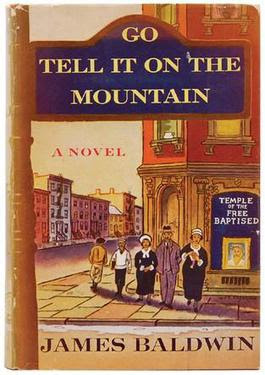
James Baldwin's Go Tell It On The Mountain

Mystery/Detective/Crime Classic

S. S. Van Dine's The Garden Murder Case

A Short Story Collection

Thomas Hardy's Wessex Tales

Pre-1800 Classic

Oliver Goldsmith's The Vicar of Wakefield

Non-Fiction Classic

Edmund Wilson's The Shores of Light

Classic on your TBR the longest

Edmund Wilson's Axel's Castle

Classic Set in a Place You'd Like to Visit

Kate O'Brien's Farewell Spain

Wild Card

William Faulkner's Light in August

Chuck displays The Stack (minus the Van Dine, which I also read on the Kobo): 

As for that original set of predictions of what I might read for each category, I got three (!) correct, plus one by the same author I originally planned (James Baldwin) and one that I planned but switched categories (Willa Cather's A Lost Lady). Predicting three in advance is pretty standard for my abilities as a prognosticator...

Thanks to Karen for hosting this challenge again! I'm reachable at reese (at) reesewarner (dot) com.


Wednesday, December 28, 2022

James Baldwin's Go Tell It On The Mountain

"But don't you think that the Lord can change a person's heart?" [174]

That's kind of the question in this, James Baldwin's debut novel of 1953. 

The novel starts on John Grimes' fourteenth birthday, a Saturday in March, 1935, and ends the next day. John is the oldest of four children of Gabriel and Elizabeth Grimes. They're a poor family in Harlem; Gabriel works as a day labourer, but he's a deacon and occasionally preaches at a revivalist church, Temple of the Fire Baptized. 

The novel is divided into three sections: 'The Seventh Day', 'The Prayers of the Saints', and 'The Threshing Floor'. The first ('The Seventh Day') shows us the family as a not very functional unit. John is the good boy, well, pretty good, but Roy, his younger brother, is his father's favourite. This may be because Gabriel is only John's step-father; he was born out of wedlock to Elizabeth and another man, dead by the start of the novel. But it may also be because Gabriel and Roy are similar, angry and intolerant. That same day, John's birthday, that he wanders around with a little money given him by his mother and then into a movie, Roy crosses town with friends to get into a gang fight with white boys and comes home cut with a knife. Florence, Gabriel's older sister, tells Gabriel it's his own fault Roy is who he is; Gabriel somehow casts blame on John for this, and then strikes Elizabeth; Roy curses his father. 

'The Prayers of the Saints': That night John goes to the church, to help clean the building. Neither his father, nor John's older friend Elisha, consider John saved, nor is John himself quite sure what he thinks about religion. After cleaning the church, with a few members arriving for service, he falls to the floor in a frenzy:     

    "'Rise up, rise up, Brother Johnny, and talk about the Lord's deliverance.'
    It was Elisha who had spoken; he stood just above John, smiling; and behind him were the saints...
    He tried to speak, and could not, for the joy that rang in him this morning." [199]

John spends the night on the floor, managing only a few words. The saints are the members of the church in good standing; they stand around John, praying, in honour of this new manifestation of the Lord's power. Three of those saints are his step-father Gabriel, his mother Elizabeth, and his aunt Florence, and we hear each of their prayers. 

None of them are entirely concentrating on prayer, though, and while they're meditating we learn the backstory that brought them to this point. Florence's resentment that Gabriel, the boy, received her mother's love even though Florence was the good one, and Gabriel showed no signs of spirituality as a twenty-year-old, catting and fighting as Roy does in the present. We learn about Gabriel's conversion, which does nothing for his anger and lack of love. We also learn about his own hypocrisy. Last of the praying saints is Elizabeth, still guilt-ridden over the episode that produced John, and how her subsequent hopes in Gabriel's faith were shattered.

We knew from the first chapter, none of them were saints in the usual sense of the word. Does our understanding make any of them more saintly? I don't really think so, but do learn they are more sinned against than sinning. (Though Gabriel is the hardest to forgive.)

In 'The Threshing Floor' we return to the present. On the threshing floor, Jesus separates the saved wheat from the damned chaff. Did John's conversion experience change anything? In some ways clearly not, but I don't think we're meant to have a clear answer. The question I started with up above is asked by Elizabeth, of Gabriel, to her sister-in-law, Florence. Florence's answer:

"I done heard it said often enough, but I got yet to see it." [174]

Though Florence gives that answer before John's conversion experience, and maybe hers is not a reliable voice anyway.

Poking around at what critical commentary I could easily find, it seems that readers are divided as well. The novel is clearly autobiographical (well, it is Baldwin's first) and Baldwin later lost his own faith. But I don't think it's quite fair to read back from Baldwin's subsequent story to divine what this one means, and I do think John's conversion is meant to be read as sincere. To be sure, there are psychological considerations--John wants to win over his step-father; he hadn't known his birth father, who died before he was born--but the language (very biblical) feels sincere to me:

"Then John saw the Lord--for a moment only; and the darkness, for a moment only, was filled with a light he could not bear. Then, in a moment, he was set free;..." [197]

Will that moment last? For the real James Baldwin it didn't, but for John Grimes, at least as long as the novel runs, it's a different story. 

I like the cover I've shown above, but that's the first edition, and alas I don't have that. I read it in James Baldwin's Early Novels and Stories, edited by Toni Morrison, from the Library of America, and the page numbers refer to that edition.

I found it a pretty great novel, it's on that Modern Library list of 20th Century novels, I'd put it on my Classics Club list, and it finishes off the Back to the Classics challenge for me for the year.


Saturday, December 24, 2022

Thomas Hardy's Wessex Tales

Wessex Tales is a collection of seven short stories by Thomas Hardy published as a volume in 1888. I like Hardy, but I think of him as somebody you need to be in a certain mood for. But this collection of stories was quite varied. Taking them in order:

'The Three Strangers' - Shepherd Fennel and his wife are celebrating the christening of their second child, a daughter. It's a dark, wet night and three strangers come to knock at their door. Shepherd Fennel thinks because it's a party, he can't turn anyone away, though his wife is a little peeved when one of the strangers starts guzzling all the good mead. The three are strangers to Shepherd Fennel, but not to each other. It looks dodgy for a bit there, but this story started off the book on a very un-Hardy note.

'A Tradition of Eighteen Hundred and Four' - Think about that year. You might guess Napoleon is involved, "his bullet head, his short neck, his round yaller cheeks and chin, his gloomy face, and his great, glowing eyes." And so he is! One of two stories set on the south coast of Wessex.

'The Melancholy Hussar' - Phyllis has an understanding (a little less than an engagement) with Humphrey Gould, "neither good-looking nor positively plain," "an approximately fashionable man of a mild type." Then a regiment of German hussars, in the service of the King, show up.

'The Withered Arm' - a tale of magic. The well-to-do dairy farmer Lodge brings home his new wife Gertrude. But he has a child in the neighbourhood by one of his milkers, Rhoda Brook. Almost at once Gertrude's arm develops a mark and begins to wither. What could be causing it? She's willing to try folk-magic to heal it and keep her husband.

'Fellow-Townsmen' - Downe and Barnet are acquaintances. Downe is a lawyer, poor at first but coming up; Barnet is a rich farmer who inherited. Barnet made a 'good' marriage, but wishes he'd married the poor girl Lucy he loved before. Downe is blissfully happy in his marriage, with his two children. But accidents occur.

'Interlopers at the Knap' - The wealthy farmer Darton is off to propose to Sally Hall, but gets a little lost in the rain and the dark. Darton had been in love before, but had been refused; a marriage with Sally seems like it would be good for everybody. He arrives eventually, but not before Sally's brother Philip, with his wife and children, arrives at the Knap, the Hall home. Philip has been in Australia where he was not a success. His health was ruined and he dies that very evening. Of course the engagement and the wedding must be put off. But for how long?

Those two stories, while perhaps not Tess of the D'Urbervilles tragic, are more what one thinks of as typically Hardy.

'The Distracted Preacher' - The Other Reader said, surely you're not still reading Hardy? And it's true: I was laughing out loud while reading this story. Stockdale, a newly-minted Methodist preacher, is assigned the chapel at Nether-Moynton until the town's permanent Methodist minister can arrive. He's told Mrs. Lizzy Newberry, a widow, is the only person in town who rents rooms, and when Stockdale arrives at the house and meets an older woman, he assumes that's who he's met. When a young woman comes into the room, he inquires, "Miss Newberry?" But no, she's Mrs. Newberry; it was her mother, Mrs. Simpkins he'd met earlier.

He's good-looking and so is she. But Nether-Moynton is on the south coast of Wessex, convenient for smuggling brandy from France. The whole town's in on it, and the church makes a convenient place to stash the goods.

Hardy says he based this on a real story he'd heard, and it ended differently from what he wrote in real life. He would have followed the actual events more closely, but what the market wanted at the time (the story is from 1879, the earliest in the book) was something different. And "the stories are but dreams, and not records."

Anyway quite entertaining, and much more varied than I was expecting. One off my classics club list, and good for this years Back to the Classics challenge.

Happy Holidays to all!

Tuesday, October 18, 2022

Oliver Goldsmith's The Vicar of Wakefield

"...a very discreet and serious dialogue upon virtue..." [Chapter 9]

Well, nah.

Charles Primrose, the Vicar of Wakefield, is a good person who suffers great losses which are then restored to him in the end. You may remember this as the story of Job. I just reread the Book of Job to go with this, and the events of Job's story in the Bible take about as long as this paragraph. The rest of that book is indeed a discreet and serious dialogue about virtue (and God and sin and some other Very Important things.) But Oliver Goldsmith subs most of that out for some humour and romance...


We first see Dr. Primrose in a disputation with his fellow vicar, Mr. Wilmot, on the eve of George, his eldest son's, marriage to Wilmot's daughter. The dispute becomes so heated that the marriage is broken off. Well, that, and that, at the same moment, Primrose discovers his scoundrelly agent has absconded with his fortune.

It will be necessary for the Primroses to retrench. 

George heads out into the world to make a living. The rest of the family move to a smaller place where they will be able to grow their own food to help out. In the course of moving, Sophia, the younger daughter, nearly drowns crossing a river, but is rescued by Mr. Burchell, and there's nothing like a rescue to make a girl take notice. Burchell will now be involved in their lives. For good? For ill? 

They rent their new living quarters from Squire Thornhill. Thornhill has a bad reputation, but seems nice; Mrs. Primrose is determined that Olivia, the older daughter, should catch his eye. This requires new clothes, which requires money, which they don't have. Moses, the second son, is sent to the fair to sell one of their two horses, but is deceived by a conman. The other horse must be sold as well and Primrose himself goes to the fair where he is deceived by the same conman.  

They run into George; he has not made his way in the world. (He almost became an actor. The horror! I believe Goldsmith--also a playwright--is being a little ironic here...) Thornhill loans the money to buy George a commission, but as soon as George is out of the way, Thornhill has Primrose thrown into debtor's prison, and seduces Olivia, who's willing because she believes it an elopement.

Primrose in debtor's prison is pretty much the same man he'd been all the way through: patient, helpful, trying to improve lives of the people around him, his parishioners and now his fellow inmates. And maybe also a little ridiculously, dangerously innocent? But that goes with goodness. 

But. I did mention this often gets compared to the book of Job, right? By reforming the right person in the prison (that same conman) and with a little (well, a lot) of outside help, Primrose's life and fortune and restored. A sort of well-intentioned goodness makes everything right in the end. Which is what you wanted to hear, isn't it?

Anyway, while it may well be a 'dialogue upon virtue', it's a funny and engaging one, not discreet and serious at all.

It went on to become a pretty famous book. It shows up in Middlemarch, in Frankenstein. It's one of the few books young David Copperfield has left from his late father's library. It's the only thing other than agricultural reports that Robert Martin, Harriet's intended in Emma, has read. And once Jo (Little Women) has put Great-Aunt March to sleep by reading devotional literature, "I whipped The Vicar of Wakefield out of my pocket and read away, with one eye on him, and one on Aunt. I'd just got to where they all tumbled into the water, and forgot, and laughed out loud." But even Great-Aunt March comes to like The Vicar of Wakefield.

So...maybe it's a classic?


Thursday, October 6, 2022

Willa Cather's A Lost Lady

"The Old West had been settled by dreamers, great-hearted adventurers who were unpractical to the point of magnificence; a courteous brotherhood, strong in attack but weak in defence, who could conquer but could not hold." [58]

Willa Cather's A Lost Lady came out in 1923. It had previously been serialized in Century Magazine, and when the novel was issued by Knopf in book form, it was Knopf's largest print run to that date. Which then sold out, and required two more printings within weeks. It was a hit.

The lady is Marian Forrester. She married an older man, Captain Daniel Forrester, a successful railway contractor in the Western United States. They settle in Sweet Water, Colorado, a town on the railroad where Captain Forrester has built his dream house. The story of their courtship is told near the end of the novel.

Marian is mostly seen through the eyes of Niel Herbert, who grows up as a boy in the town. He's nephew to Judge Pommeroy, the town's lawyer, and as a young man goes east to study architecture. He's fascinated/half in love with Marian Forrester already from his boyhood.
"But we will begin this story with a summer morning long ago, when Mrs. Forrester was still a young woman, and Sweet Water was a town of which great things were expected." [6]

Niel Herbert is just a boy, off fishing--or horsing around and only pretending to fish--with his friends. That first scene includes a bit of horrifying cruelty to animals, the sort of thing boys are reputed to do, but much worse than pulling the wings off flies, and our novel's villain is identified.

The novel covers a number of years, and while Cather is coy about dates, that first scene is likely around 1880. The transcontinental railroad has just been pushed through Colorado. Captain Forrester is a successful, and still vigorous, man.

Later Captain Forrester has a horse-riding accident and can only walk with a cane; a bank for which he's a principal fails; he honourably makes good on the bank's debts, but at the cost of his own fortune. This must be the panic of 1893.

Later still Captain Forrester has several strokes and, with the money gone, it's up to Marian to take care of him. She does it, she probably even still loves the Captain, but she tells Niel, "I feel such a power to live in me, Niel." [70] She drinks too much, she has an affair with Frank Ellinger, a man she knew before her marriage, ends up drunk-dialling Ellinger, in Niel's presence, when she learns Ellinger has married. Is she lost?

Great things may have been expected of Sweet Water but they don't come off. Judge Pommeroy's business stalls, and he's not the only lawyer in town anymore: that villain mentioned above has become a lawyer:

"'...rascality isn't the only thing that succeeds in business.'
'It succeeds faster than anything else, though.'" [69]

Eventually Captain Forrester dies. Marian returns to California, and Sweet Water's lady is lost. The last Niel hears of her, the last we hear as well, is that she's remarried and living in Argentina.

"Long, long afterward, when Niel did not know where Mrs. Forrester was living or dead, if her image flashed into his mind, it came with a brightness of dark eyes, her pale triangular cheeks with long earrings, and her many-coloured laugh. When he was dull, dull and tired of everything, he used to think that if he hear that long-lost lady laugh again, he could be gay." [39] 

But who or what is it that's lost? Maybe she did laugh in Buenos Aires.

It's a pretty great novel, I think.

It seems F. Scott Fitzgerald thought so, too. He read it while he was working on The Great Gatsby, and after Gatbsy came out (1925) he wrote a letter to Cather saying how much he admired A Lost Lady, and hoped she wouldn't think he'd plagiarized it to produce Daisy Buchanan. Cather wrote back to say she admired Gatsby in return, and no, she wasn't worried about it. (Frankly, while Gatsby is amazing as a whole, I find Daisy Buchanan thin beer in comparison to Marian Forrester.)

Page numbers come from the Library of America edition of Willa Cather's Later Novels

If you've read it, what did you make of the 'lost' of the title?  

Wednesday, September 28, 2022

Sir Walter Scott's Count Robert of Paris

 "...let the devil of knight errantry, which has such possession of thee, take thee upon his shoulders, and carry thee full tilt wheresoever he lists."

Count Robert of Paris (1832) is a late novel of Sir Walter Scott's. It's set in Constantinople at the beginning of the First Crusade (1096-1099).

Hereward, a Saxon, fought at the battle of Hastings. His father was killed there. He believes his intended, Bertha, was slain during the chaos that followed. Hereward abandons England and takes a job as a member of the Varangian Guard, sworn to protect the Byzantine emperor, Alexius I Comnenus at the time. Which Hereward does, so successfully, he's called in for an interview with Anna Comnena, composing a history of her father's reign. 

And so he's caught up in palace intrigues.

The Byzantine empire at the time is caught between the rising power of the Seljuk Turks and new kingdoms in the Balkans. And then the knights of the First Crusade appear on their doorstep. Are they friend or foe? Will they attack Constantinople? (The Crusaders didn't sack Constantinople until their fourth trip through.) Alexius already has one Frank bandit/king in his dungeons, Ursel (Roussel of Bailleul) from an earlier war.

And one of those crusader knights is Count Robert of Paris. Robert is the son of William the Conqueror; Hereward's his enemy at first sight. Robert's the one that 'the devil of knight errantry' is about to carry off.

William the Conqueror did have a son Robert who did go on the First Crusade, but our Robert owes more to those tales of knight errantry, even to Don Quixote, than he does to the historical record. And his wife, Brenhilda (!) of Aspromonte, armor-clad and perfectly happy to joust in the lists, feels more like Orlando Furioso than anything historical. Though Scott is at pains to tell us there's an armor-clad female warrior by the name of Gaita in Anna Comnena's history (which I haven't read).

Robert behaves like a tool when he first gets to Constantinople, lounging on Alexius' throne, breaking ancient artworks. Alexius is irritated enough to throw Robert into prison even as he's doing all he can to move the rest of crusaders on their way. 

But there's a conspiracy on to overthrow Alexius. It's led by Achilles Tatius (Hereward's commander), Nicephorus Briennius (Anna Comnena's husband and so the emperor's son-in-law), and Agelastes, the aged court philosopher. Each of them imagines he's the one that will end up on the throne, and, while Alexius would let Robert go after a bit, the conspirators plan on using Robert as part of their plot. In addition Nicephorus has fallen into lust with the amazonian Brenhilda. 

You probably don't need me to tell you the plot fails. Scott isn't one to rewrite the historical record so blatantly, and Alexius' actual reign lasted until 1118. You probably also don't need me to tell you that beautiful Bertha isn't really dead, and that somehow she ends up in Constantinople, too. The cool-headed Saxon Hereward and the hot-blooded Norman Robert are forced to get along to sort this all out. Which they do.

One of the nice things about this novel is that it reminds that Scott can be funny. There's Robert, who, except for the fact that he can actually fight, could be Don Quixote. Hereward, Sancho Panza-like, is forever trying to get him to show some sense. There are couple of running gags: Anna Comnena's literary soirées bore everyone to tears, and Alexius is forever saying that if Anna doesn't want to lose her husband she should quit forcing him to listen to her read. Well, Nicephorus does decide he prefers Brenhilda. Also the emperor can never remember Hereward's name, generally settling on Edward after trying a few other possibilities.

Now, nobody would claim this as one of Scott's great novels. His prose style is what it is--generally feeling pretty archaic now--and his tendency to write overly fulsome dialog is definitely on display here. But if you're a fan...

Actual engraving of Scott's home hanging behind me as I type... 


...I think you'll enjoy it. Anyway, I did. 😉

From my Classics Club list and this year's Back to the Classics list.

Tuesday, September 20, 2022

Short Reviews: von Doderer, Faulkner, Scholem

Three complicated chunksters all of which I started long posts for. Those posts didn't get finished. (Oh, well.) Time to clear the decks.


Heimito von Doderer's The Strudlhof Steps (850 pages)

This is a fairly new release from New York Review Books, and Vincent Kling won the most recent Wolff Prize for translation from the German for it. The novel came out in 1951 in German, and hasn't previously appeared in an English translation.

The main events take place just before and just after World War I in Vienna. I'm a sucker for the place and time. And, hey, it's shorter than The Man Without Qualities; as a bonus, von Doderer finished it, too. Four sections, each coming to a dramatic climax--who gets married, who gets dumped, who gets a leg cut off by a tram--generally on or near the Strudlhof Steps:


Lt. Melzer features in the subtitle. He likes to drink Turkish coffee on the skin of a bear he shot in Bosnia in 1912; watched his commanding officer (whom he likes) die on the Italian front in World War I; seems almost unmarriageable, but is he?

René von Stengeler is born into a wealthy Protestant family, captured by the Russians in 1916, only making it back to Vienna after the war is over. Does he marry Grete, back from Oslo where she escaped the misery of post-war Vienna by teaching piano? And why does René's sister commit suicide? Because we know she did from the first few pages.

The novel requires tolerance, but pays back. It moves back and forth in time, at first seemingly arbitrarily. You have to accept its terms, and give it space to get started. Characters have last names or first names but not necessarily both, and sometimes merely initials. For example, we never learn Lt. Melzer's (a major character) first name: on page 823, "Sorry, but we don't know Melzer's first name." The narrative voice has a curious diffidence.

Von Doderer's politics were not particularly admirable. He joined the Nazis in the mid-30s, when the party was illegal in Austria. The afterword, by Daniel Kehlmann, says he was quite anti-Semitic at that time. He later turned against the party, but never publicly, and as a WWI veteran, he was drafted into the Wehrmacht, serving in garrison duty, first in Norway, later in France, where he started writing this novel. The publication of the novel was delayed while von Doderer was de-Nazified. René von Stengeler is clearly a self-portrait, and deliberately not a flattering one. What did he think by 1950? I don't know. There are minor Jewish characters in this, and they're treated with real sympathy.

Anyway, I thought it was very good.

William Faulkner's Light in August (480 pages)

I had heard that Light in August was a murder story, the story of Joe Christmas, and, well, it is. Christmas (named for the day his infant form was dropped off at the orphanage) murders his lover. Christmas may have black blood--he doesn't know and we don't know either, but he thinks he does, and though he could pass for white, once he's accused of having a drop of black blood (by his own grandfather, no less) he assumes he does.

But Christmas' story is not the whole of the novel by any means. It's the portrait of a town called Jefferson, and not just the evils of racism, but also the ways racism distorts the life of the town. Nowadays we don't really have any problem contemplating that Jefferson the man may have been a bit racist, but the novel came out in 1932. There's a daring irony to that. Was Faulkner in his heart of hearts free of racism? Certainly not, and I doubt he would say he was. But he knew that problem for a problem, and that counts for something. Percy Grimm, the white captain of the National Guard, is a particularly (dare I say it?) grim portrait of a racist.

And am I the only one who doubted Christmas committed the murder? No, because the Wikipedia article says it's unclear who did it. I don't think that's actually sustainable, and that Christmas really did do it, but I did wonder during the middle of the novel. But maybe that's attributable to too many years of reading mysteries: the obvious suspect is never the culprit.

The town's a mess, and there's nothing to do but escape, but almost nobody does; the only ones who do are Lena Grove and Byron Bunch, running off in a folie à deux: she's looking for the man who got her pregnant and who will never marry her, and Byron's hoping she'll settle for him instead, and meanwhile he'll be there when she (which she won't) changes her mind.

One other thing to be said about this is that, of the great Faulkner novels, I thought this was the easiest read. And that's definitely something... 😉 It's easier than The Sound and the Fury, As I Lay Dying, and Absalom, Absalom. No chapters from the POV of dead people or madmen. Not the greatest of that quartet, I'd say, which for my money is Absalom, Absalom, but a better starting point. (Though if you include Sanctuary in your list of top Faulkner, I would say that one's a pretty straightforward read.)

Yeah, a classic.

Gershom Scholem's Sabbatai Sevi (929 pages, plus bibliography, notes and index)

Sabbatai Sevi (1626? - 1676) declared himself the Jewish messiah in 1665. (He may have intimated it as early as 1648 but only in limited circles.) Gershom Scholem, Jewish historian and friend of Walter Benjamin, made Sevi the subject of a major book.

Sevi (there should be a dot under the S which I can't figure out how to type, but think Tsevi or Zevi) was born in Smyrna to a middle-class merchant family, studied the Kabbala in Jerusalem, traveled on religious business to the Jewish community in Egypt and later to Constantinople. All lands under the control of the Ottomans at the time. When he began his mission in earnest, Nathan of Gaza was his prophet and explicated the theology of the new movement. Scholem, as a historian of Jewish mysticism, is rather more taken with Nathan than Sevi.

But the stories of Sevi and Nathan are just a small part of this fascinating book. What's surprising is the Europe-wide discussion of these figures, and not just in the Jewish community. Italy, Amsterdam, Morocco, Poland, Hamburg, Egypt are all discussing this new Messiah. English chiliastic Protestants write books about Sevi, who, they think, will lead 10000 Jews from the Lost Tribes across the River Sambatyon, armed with bows and arrows but still invincible. (The River Sambatyon doesn't actually exist, which is why you haven't heard of it.) Samuel Pepys writes about Sevi in his diary! Along with all the women he was shagging. He features in Venetian ambassador's reports and Jesuit Relations. One can imagine Blaise Pascal, roughly contemporary, being discussed across Europe, but it turns out not all Europe-wide discussions were so scientific.

Sevi himself always advocated a peaceful movement. Faith and the perfection of the self would lead to the kingdom of God. There were no armies in his vision.

In fact, I found the reception of Sabbatai Sevi to be more interesting than the biography of Sevi himself. Scholem is inclined to attribute Sevi's messianic proclamations to mental illness, labeling him a manic-depressive. Maybe. But diagnosing mental illness in the present is difficult enough--DSM-III, DSM-IV, DSM-V have different labels, and so will DSM-XCIII--diagnosing it in figures in the past in inherently suspect.

Why could a Messianic movement take root then? Scholem finds the main factor to be the diffusion of Kabbalistic thinking going back to Isaac Luria (1534-1572). But also the Jewish massacres by Khmelnitsky in Poland and the Ukraine take place in 1648. As for the interest in Christian circles, there was a feeling that 1666 should be an important year: the number of the beast plus 1000.

Once in Constantinople, Sevi was arrested by the Ottomans. They were relatively tolerant of Judaism, but weren't prepared to tolerate a figure who was going to lead an army of invincible Jews and put the crown of the world on his head. (If, in fact, Sevi intended these things. Probably not.) He seems to have impressed the vizier and then later the sultan, but still in September of 1666, he was told to convert to Islam or die. Sevi converted. 

Surprisingly this wasn't the end of the movement. A number of Sevi's followers also converted over the years. Sevi was ordered to leave Constantinople, first to Edirne, which was at times the Ottoman capital, then later to Albania. Sevi led his converts, the Dönmeh, also referred to as the Ma'min, or the Faithful, in a new syncretistic religious community influenced both by Judaism and Islam, particularly that of the mystical Sufi orders. Scholem's book ends in 1676, when Sevi dies, but the community survived, centred in Salonica until the Greek-Turkish population transfers of 1922. The Dönmeh were often thought to be hidden Jews, but they were Muslim enough for the time, so they had to go. The story of the Dönmeh would be fascinating, and Scholem had intended to write a book, but didn't live to do so. They do feature in Mark Mazower's book (recommended!) on Salonica, though.

I read the second edition of the book, which came out in 1973, translated by R. J. Zwi Werblowsky. Scholem says in the introduction that he had access to more material by then, and that it superseded the earlier edition.

And why did I read this book now? Well. Did I really need to read one nine-hundred page book about a failed Jewish messiah in order to prepare for another nine-hundred page book about a failed Jewish messiah? Oh, probably not, but that's what I did:


These were all August reads for me, and it's been a while now. Still I wanted to review these because they knock off a couple of challenge items. Light in August was on my original Classics Club list and works for this year's Back to the Classics challenge.


And the other two count for this year's European Reading Challenge:


The Strudlhof Steps is clearly an Austrian book, though it does have scenes in Norway and Switzerland. Sabbatai Sevi spent most of his life in what is now Turkey, but I've already done Turkey this year. Sabbatai Sevi the book ranges across Europe. Still we'll stick Sevi himself, who spent the last eight years of his life in Ulcinje, which was in the Ottoman province of Albania at the time, but is now in Montenegro.

Short reviews, did I say? Well, short-ish...


Monday, July 25, 2022

Pynchon's V.

"Stencil has stayed off Malta."

Ever since I've been signing up for the European Reading Challenge, there's been these two big historical/encyclopedic novels that turn around Malta I've been thinking about rereading. It turns out this is the year for one, V., Pynchon's debut novel. (The other is Anthony Burgess' Earthly Powers.)

Part of the resistance was I'm not sure I'm capable of saying anything about either one.

But let's see. First, the story: the novel has two interlocking plot lines. One in 1956, (the present, roughly; the novel comes out in 1963) and the other in a series of discrete moments from 1898 to 1943. The protagonist of the present is Benny Profane, in his early 20s, child of a religiously mixed marriage (Jewish/Italian Catholic), born in New York City, recently having served a hitch in the US Navy, but now at odds and ends. (Which things, I think, are basically Pynchon himself, except Pynchon's mix is Episcopal/Catholic, and he grew up further out on Long Island, not in the city itself.) The other timeline is the result of an investigation by Herbert Stencil into a woman V., possibly Veronica Wren, who was, as a teenager, caught up in the assassination of a British spy in Cairo in 1898. Herbert's father is Sydney Stencil, a British Foreign Service agent/spy. V. may (or may not) be Herbert's mother. 

Benny is a schlemiel, and is constantly at war with objects: alarm clocks don't wake him; flashlight batteries fail; at one point he tries to rappel down the side of a building and is left hanging upside down. Benny has (imaginary?) late night conversations with a crash-test dummy: they're soul-brothers of a sort, individuals whom the powerful mechanisms of the modern world are out to damage, possibly destroy.

But une guerre contre les objets is the honourable position; the alternative is V., gradually turning herself into an object, glass eye, false teeth, artificial leg. This conflict is Pynchon's theme.

"'I detect allegory in all this,' she said.
'No,' said Slab. 'That is on the same intellectual level as doing the Times crossword puzzle on Sunday. Phony. Unworthy of you.'"
There are moments when it feels like a schematic message novel--Pynchon's message would definitely be humanist, anti-machine, admirable--but the novel escapes allegorical reductionism by a deliberate fudging. V. is not just symbol of the dehumanization of people into objects in the 20th century. (Appropriate as that might be, with the ultimate dehumanization being nuclear annihilation. 1956 is the year of the Suez crisis, important to the novel, and of Hungary. War seemed closer.) But V. is also the woman Veronica Wren, maybe somebody's mother, who's capable of falling in love. (Though not with Sydney Stencil.)

The novel's also funny, or at least I think so:
"Mountebank is a dying profession; all the good ones have moved into politics."
Pynchon is also famous for his zany song lyrics, which can be found in V., although I think he gets better at this as he goes along.

Pynchon also gets better at female characters--though never great--and the women are thinly realized in this, with Benny Profane's sometime girlfriend Rachel Owlglass being the best-drawn of the lot. From Pynchon's (wonderful) introduction to his collection of short stories Slow Learner (1984):
"Modern readers will be, at least, put off by an unacceptable level of racist, sexist, and proto-Fascist talk throughout this story. I wish I could say that this is only Pig Bodine's voice, but, sad to say, it was also my own at the time. The best I can say for it now is that, for its time, it is probably authentic enough."
Pynchon is writing of one of his stories in Slow Learner, but Pig Bodine is a character that also shows up in V., and it's also kind of true of the novel.

Still, I find it a pretty great novel. And it reaches its climax on Malta. Stencil had stayed off Malta; I had, too; but no longer.


You could even call it a classic...


which I've read a few times:


I guess I can treat myself to a new copy. 😉


Tuesday, May 17, 2022

Memoirs of Mme. Vigée-Le Brun (#ccspin)

"I will begin by speaking of my childhood, which is the symbol, so to say, of my whole life, since my love for painting declared itself in my earliest youth."

Elisabeth Vigée was born in Paris in 1755 to Louis Vigée, a provincial portrait painter who encouraged her love of painting. "I made a picture by lamplight of a man with a beard...When my father saw it he went into transports of joy, exclaiming, 'You will be a painter, child, if ever there was one!" 

Unfortunately he died when she was twelve, and her mother remarried a jeweller, who did not encourage her, but did take any money she made as a painter. "I detested the man."

To get out of her hated stepfather's house, she married the art dealer, Jean-Baptiste-Pierre Le Brun, in 1776. Le Brun encouraged her painting, but now her husband took all of her money instead of her stepfather. He was a successful enough dealer--later he was instrumental in making the Louvre into a public museum--but he was also a compulsive gambler, and no amount of money could do much to keep him afloat.

She was, however, starting to succeed in a big way. She painted Marie Antoinette, and the queen liked the portrait, so there were several more, also the king, with or without the children. 

In a few years though, being Marie Antoinette's preferred portrait painter was not particularly a recommendation with the public. She threw a toga party, and there was a rumor going round that it had been financed by the state to the tune of twenty-thousand francs. (She claims she spent fifteen and used a few old bedsheets. Since my idea of a toga party is more Animal House than Trianon, I guess I believe her...)

Self portrait
As the Revolution began to get hot, she decided to leave France. In 1789, the royal family was arrested, and she fled with her daughter (but not her husband) to Italy. It was the beginning of thirteen years of exile. She was abroad ostensibly to study the great masters of painting--and she did--but it was also safer. After Italy, she went to Vienna, to Saint Petersburg, to Moscow, to Berlin. She was commissioned to paint Catherine the Great (and did paint her granddaughters) but Catherine herself died before the portrait was begun. Only in 1802 was she able to safely return to France. She made later trips to England (which she didn't much like) and to Switzerland.

She wrote these memoirs in the later 1830s, when she was in her early 80s, her husband and daughter both dead by then. They're pretty fascinating, though it's true (and occasionally exasperating) that she never met an aristocrat she didn't like. I've seen her paintings in various museums.

The memoir is available on Project Gutenberg, translated by Lionel Strachey, the brother of Lytton. I first learned of its existence from Mudpuddlesoup

Saturday, January 29, 2022

S. S. Van Dine's The Garden Murder Mystery

 "Chacun à son cheval"

Since I can't be reading Edmund Wilson all the time...

In The Garden Murder Case, Floyd Garden is playing the ponies. He's a rich dilettante and he's set up an off-track betting station in his elaborate New York home with a direct line to a bookmaker and a speaker system that reveals the results of the races. He invites a bunch of friends to join him for the Riverton Stakes and Philo Vance wangles an invitation after he receives an anonymous phone call suggesting trouble.

And trouble there is. Woode Swift, Floyd's cousin, is in over his head, laying out ten thousand dollars on Equanimity to win, money he doesn't have, and money he desperately needs. But after Equanimity fails to even show, Woody (to his friends) is found dead, with a bullet to the head. It looks like suicide.

But, of course, you didn't fall for that, and neither did Philo Vance, who immediately announces it's murder. 

Various romantic entanglements and inheritance questions supply the needed number of suspects for this one. Floyd's mother is also murdered before Vance solves it. One suspect falls in love with Vance and another tries to murder him. Or are they the same suspect?!

Philo Vance may very well be best known nowadays because Ogden Nash said, "Philo Vance needs a kick in the pance." 😉 At one point I tried to figure out where and when that Nash quote came from, but never succeeded. But now I do know when Van Dine first read it: as he was writing this 1935 novel. He alludes it four times over the course of the novel... (I think it may have got to him.)

"She shrugged and then added: 'I'm beginning to think that maybe Ogden Nash had the right idea.'"

That's the suspect who fell in love with him. 

I finished the novel a week or so ago. I was going to watch the movie, which is available-ish on YouTube, but, alas, is geo-blocked out of Canada. Which is too bad because the preview looks pretty amusingly crazed:


Is this the only classic mystery I will read this year? Will it be the best? Certainly not, and quite probably not. But it was fun and it was the first, so I'm counting it for:


A Mystery/Detective/Crime Classic!

Does Philo Vance need a kick in the pance?

Tuesday, January 25, 2022

Edmund Wilson's Axel's Castle

"[These writers] break down the walls of the present and wake us to the hope and exaltation of the untried, unsuspected possibilities of human thought and art."

The six main writers of Wilson's Axel's Castle are W. B. Yeats, Paul Valéry, T. S. Eliot, Marcel Proust, James Joyce and Gertrude Stein. So, you know, a pretty serious bunch. For Wilson, these are the representative Symbolists and his book is a study of 'imaginative literature of 1870 to 1930'. 

The book first appeared as a series of articles in The New Republic before coming out in book form in 1931. Keep that year in mind because it's crucial to Wilson's read of these authors.

What is Symbolism? "It was the tendency of Symbolism...to make poetry even more a matter of of the sensations and emotions of the individual than had been the case with Romanticism..."

Or:
"...the symbols of the Symbolist school [unlike the cross for Christianity or the Stars and Stripes for the USA] are usually chosen arbitrarily by the poet to stand for for special ideas of his own--they are a sort of disguise for these ideas." 

The book is full of sharp and unexpected insights on his subjects; on Proust, for instance: 

"These latter scenes, indeed, contain so much broad humor and so much extravagant satire that, appearing in a modern French novel, they amaze us....it seems plain that Proust must have read Dickens and that this sometimes grotesque heightening of character had been partly learned from him."

Not what one thinks of when mentioning Proust, and yet it's true. 

But it is 1931. Is this the literature the world needs? Wilson doesn't use the phrase art for art's sake, but maybe art should also be a bit for society's sake? He says Valéry's and Eliot's criticism is engaged in 'an impossible attempt to make aesthetic values independent of all other values.' He finds The Vision--Yeats' attempt to create a universalizing set of symbols--unserious and unhelpful, not to metion Yeats' experiments in automatic writing. He quotes disapprovingly, twice I think, Eliot's declaration from his essay 'For Lancelot Andrewes', that he is "a classicist in literature, an Anglo-Catholic in religion, and a royalist in politics." Wilson is distinctly none of those things.

I also found this on Valéry amusing:

"...one cannot help rebelling against what appears to be Valéry's assumption that it is impossible to be profound and to write as lightly and lucidly as [Anatole] France did."

A goal I suspect dear to Wilson's heart...

After the crash on Wall Street in 1929, Wilson was drawn to Communist ideas, though never becoming an actual Communist. But he did travel to the Soviet Union in the summer of 1935; once there he was put off by the increasingly totalitarian atmosphere, and certainly would have nothing to do with the Soviet Realist idea of art for politics' sake. Wilson doesn't fully construct his middle ground in this, and probably it can't be precisely defined. But technique matters and engagement matters, too. For that the book is applicable now as well, but maybe that's a perennial question. I do find it a very great work of criticism.


And one I tried to read before...at some point in my 20s I started this, but the only authors I'd then read were Yeats (whom I didn't know well) and Eliot (whom I knew only a little better). I thought, well, before I read this, I should read some of these authors. Now, (ahem) a few years later..., it was time to try again. One of Karen's categories this year was 'Classic on your TBR the longest'. Is this absolutely the one? I don't know, but it's been there a long time...

"What!" says Humpty, "I need to read all those books just to read the one?"
Well...maybe not entirely...