Showing posts with label New release. Show all posts

Monday, July 20, 2026

Layla Erbil's What Remains (#EuropeanReadingChallenge)

i've no idea why i'm telling you all this my dear readers

i can't know

i feel like i should know everything

before putting my other foot in the grave [208]

Laylâ Erbil's verse novel of 2011 was published by Deep Vellum last year in English translation. 

Lahzen is our narrator; she's an elderly woman of the secular, political left living in Istanbul. She's remembering the events of her life and of Istanbul, her home. She doesn't tell us her story in chronological order, but reflecting backwards on it. There are several recurring themes.

The first is her childhood. She grew up in Fener, also known as Phanar, the once Greek neighborhood on the Golden Horn, the European side of Istanbul. In her childhood, she had Greek, Jewish, Armenian friends. Rosa, the Jew, broke her pencil in half one day when Lahzen had forgotten hers; an act, she tells us, promising forty years of friendship. But in September of 1955, state-sponsored riots against homes and businesses drove out the non-Turks. Rosa's family goes to Israel. Lahzen remembers Greek songs, and songs in mixed Turkish and Greek. Her sister, her aunt go to Orthodox churches to perform magic with candles for good luck. The multicultural Istanbul of her youth is gone, and she misses it. A copy of Marilyn Monroe's skirt from the famous photo over the steam grate remains in a shop window in an arcade:

all that remained

was marilyn's pleated white skirt

in hristo usta's shop window

its white now blotched with purplish rot

the keys to the shop window

remained with hristo usta who fled to athens

do you think he'll come back

one day

you never know

they miss it here [210]

A second thread involves the deaths and disappearances during the years of the military dictatorship in Turkey. As she herself was a leftist, some are people she knew; some are just news items. Her second husband Sabit was in jail, but was eventually released. (There was an earlier husband who was good-looking and had a motorcycle, but oh, well, maybe not such great husband material.)

What it means to be a good person in such a world is a recurring thought for her; she often turns to Kierkegaard, and in particular Kierkegaard's retelling of the story of Abraham and Isaac (in Fear and Trembling):  

...yes we can defend søren as someone who was trying to make the best of the world's fear of raging hellfires in those times; in a sense his love was harmless. he said "how does one become a good christian, that's always been my priority." in his day and age that was what it meant to be a good person. [159] 

In the present her relationship with Sabit is difficult. While he was in jail, she had an affair with his best friend Zeyyat, and maybe she's still a bit in love with Zeyyat. Is Sabit holding that one time infidelity over her head? A bit.

What remains at the end of a life in such a place? History and stones.

The book is billed as a verse novel. I can't comment on the verse, and largely didn't feel it. Probably my limitations, but who knows? Traduttore, traditore. Though it feels like the three ranslators (Ersan, Spangler, Wyers) knew what they were doing. I know nothing about modern Turkish poetry. Mostly I read it as oddly punctuated and capitalized prose, but even as that I quite enjoyed it.

what could the content of the text

be

other than

the writer in her own way

struggling to capture the truth

knowing that it cannot be captured [27]

 I first came across the book here.


Sunday, June 28, 2026

Georgi Gospodinov's Death and the Gardener

"Surely this is why we tell stories. To create another parallel corridor where the world and everything in it are in their rightful places. To divert the story down another furrow when danger and death flood in, just as he would divert the water into another row in his garden."

He, in the sentence above, is the dying father of the narrator; the father liked to garden. The narrator is a middle-aged Bulgarian novelist whose name is only given as Georgi, and that only in the flap description.

Of the four novels of Gospodinov's I've read this easily feels the most autobiographical, but Gospodinov in a headnote insists it is a novel.

The father Dinyo had been diagnosed with fatal lung cancer seventeen years earlier. Rather miraculously at that time it had gone into remission, but now, in the late fall of 2023, it's come roaring back. Georgi starts a handwritten diary to deal with his feelings. When the first set of scans comes back, there's basically no hope:

"Well, at least till Christmas, we'll get together, see the snowdrops spring up, my father said, looking at the doctor with such expectation. Christmas was twenty days away, almost no time at all. 
Christmas might be possible, the doctor replied.
And this answer was at once the most merciful and merciless I have ever heard."

Georgi's father was a storyteller himself, not professionally, just in conversation, and when the present becomes too difficult to bear, Georgi recalls one of his father's stories. It's clear Georgi simply likes his father in addition to loving him. Georgi, the writer (and reader,) turns to other writers for consolation. There's Sontag, unsurprisingly, who herself was diagnosed with a cancer that was supposed to kill her, which went away for a number of years, but in the end did return; also Montaigne, various stoics, Borges. Homer, and here as well, is a frequent touchstone for Gospodinov.

There are a few markers this is a novel. Gaustine, a recurring character in Gospodinov's fiction, shows up in this, but mostly to be quoted. Gospodinov uses himself as a character in other novels; The Physics of Sorrow is in some ways a generational family novel, but with an amusing medical/science-fiction-y twist to aid the narration. In the Booker International winner, Time Shelter, the writer Georgi Gospodinov is hired as a consultant for a psychological therapeutic project, because he's good at storytelling; Gaustine, though, makes the plot go in that novel. The distance in this between Georgi the character and Georgi Gospodinov the actual novelist feels much smaller. It's less expansive, less playful than his other novels, but also very touching. 

Tuesday, April 7, 2026

Florian Illies' The Magic of Silence (Caspar David Friedrich)

"You can dream about his works, but you can't understand them clearly because they are indefinite, even in his own soul...He says himself he can explain neither the idea nor the picture that expresses it."
-Alexander Turgenev
 
Caspar David Friedrich (1774-1840) was a German Romantic landscape painter. Illies' book, which came out in German in 2023 and last year in an English translation by Tony Crawford, is about Friedrich's life, but also about the history and reception of his paintings after his death. Friedrich had fallen into obscurity when he died in Dresden, and it wasn't until 1900, when a Norwegian art historian interested in a friend of Friedrich's came across some paintings and made Friedrich his cause.

Illies' style in the book is anecdotal and impressionistic. Looking at a Friedrich painting in Dresden gave Samuel Beckett the idea for Waiting for Godot. Goethe awarded Friedrich the Weimar art prize in 1805, but later said that Friedrich was taking art in the wrong direction.

Both the Nazis and the East German Communists thought Friedrich was one of theirs; they may both have been wrong... In the late 1930s, a Jewish art dealer came to a Berlin museum and said I have a painting of Friedrich's that I want to sell. The museum agreed to buy it, at a fair value, but it didn't have enough money in its acquisitions budget, so it appealed to Hitler to cough up. Which he did. And which enabled the art dealer to get his family out of Germany in time.

A couple of years ago I read Illies' 1913. It works the same way: an anecdotal style that jumps around, but still it suggests a larger picture. It's not straightforward history, but it works and makes good reading. While I'd known of Friedrich before, I got to know him better when I saw several of his paintings in Germany last fall.

One of  the paintings I saw (at the Schloss Charlottenburg in Berlin):

Caspar David Friedrich - Kreuz an der Ostsee (Schloss Carlottenburg, Neuer Pavillon)

The Cross on the Baltic

Covering Germany for my European Reading Challenge.


Sunday, March 15, 2026

Two Recent Novels Set in Chicago

"All roads--always, always--lead back to Chicago."
-Peter Orner, The Gossip Columnist's Daughter
 
More even than Rome? And I thought I was a Chicago booster...
 
I read two new releases set in Chicago. The first one was:
 
Rob Osler/The Case of the Murdered Muckraker (2026)
 
This is the second case in a new series about Harriet Morrow, the Lesbian, bike-riding first female detective at the Prescott Agency in Chicago. It takes place in 1898. The Pinkertons (historical fact) had hired their first female agent not long before, and Theodore Prescott thinks it could work for him as well. But Morrow is still on probation, even in this her second case.
 
Eugene Eldridge is an investigative journalist, who has evidence about corruption among Chicago aldermen. (Shocking, I know.) He's stabbed while in a tenement near the Stockyards. Where did the evidence go? Somebody in the tenement must have seen something, and maybe Morrow, posing as a worker from a settlement house, is more likely to earn their trust?
 
The recurring characters in this series are fun: the orphaned Harriet Morrow, looking after her younger brother, her boss Theodore Prescott, her fellow detectives. Her possible girlfriend. The plot is strong as well. It's a series I'll continue to follow.
 
Peter Orner/The Gossip Columnist's Daughter (2025) 
 
The gossip columnist is Irv Kupcinet, known around Chicago as Kup. He was an actual newspaperman and from 1943 until he died in 2003, he wrote a gossip column for the Chicago Sun-Times. "Among the guests at Joan Crawford's Mental Health Ball at the Conrad Hilton Friday was crooner Vic Damone and Blackhawk Bobby Orr." That sort of thing.
 
In 1963, a few days after JFK was shot, his daughter Karyn "Cookie" Kupcinet died in Los Angeles. Cookie was an aspiring actress with a few credits--her last was a Perry Mason episode--but also with a drug problem. Was it murder, accident, suicide? Was it somehow tied in to the Kennedy assassination? (Almost certainly not, though conspiracy addicts were sure it was.) The case is open even now. Her hyoid bone was cracked, suggesting strangulation, but there's evidence the autopsy was botched. That's all historical fact and it's a good setup.
 
The book is billed as a novel, and Orner tells the story obliquely. Babs and Lou Rosenthal are friends of the Kupcinets--Babs and Essee Kupcinet had both aspired to be dancers and took classes together--and it's their grandson Jedediah Rosenthal, a not terribly successful author and single parent living in Chicago, who is telling the story. It offers a plausible (but not provable) solution to the death of Karyn Kupcinet about halfway through the novel, but that's not Orner's real target. In the aftermath of the tragedy, the friendship between the Kupcinets and the Rosenthals falls apart. Why? 
"A friendship ended. In November of 1963, seven years before I was born, a friendship between two couples severed."
Rosenthal's sister jokes in the book to Rosenthal, so how's your auto-fiction going, and I believe, while it says 'Novel' on that matchbook on the cover, it owes a fair amount to Orner's family history. He wrote an earlier novel Love and Shame and Love that covers the same three generations of a Jewish Chicago-area family, with a different last name, but the same family structure.
 
Chicago's my home town, and I sometimes read novels just because they're set there. Chicago's a fairly easy city for such a project, though not as easy as London or Paris, of course. I get curious how they do it. Osler and Orner have fairly different styles. Both men have lived in Chicago but don't currently. Orner grew up in the Chicago suburbs; I'm not sure about Osler.
 
Osler uses fairly well-known landmarks in the city. Theodore Prescott lives on Prairie Avenue and either in visiting him or Prescott's neighbor, Harriet Monroe goes there often. As you can see Prairie Avenue has a Wikipedia article and was once known as Millionaire's Row. People with brand-name names like Pullman, Field, or Armour once lived there, and a couple of years ago I visited one of the mansions myself, now a museum, though when I was a kid the street was considered a no-go zone, and if you drove down it you didn't get out of your car: you were likely to see impoverished Black men warming themselves at fires in barrels. He similarly uses downtown office buildings or the University of Chicago Settlement House.
 
Orner has a different, but curious strategy for locations that works in Chicago, though maybe not elsewhere. He gives an actual address. For example: 1739 W. Jarvis or 711 W. Pratt, Apt. 5D. Often the locations don't actually exist--711 W. Pratt would be in the lake, though not by much--and I can picture the places he specifies. I know exactly the sort of building that would be near the lake at the end of Pratt, and I would be pretty knowledgeable about the socio-economic class of a person living there. (Well-made brick apartment buildings of three stories, a little worn, in better shape now than they were forty years ago. Some of them will have been turned into condos. You could live there cheaply in the 80s. Living there now would cost more.) You can use Google streetview to get a sense of the neighborhood if you don't just happen to know it. But how would it feel if you weren't from Chicago? I'm less certain.
 
Anyway, there could be more said, but this post is long enough, and it's been sitting in my draft folder for a while. Do you particularly enjoy novels set in your hometown or where you live? Double-check them for accuracy? 😉


Tuesday, February 24, 2026

Jan Hilliard's Morgan's Castle (#readindies)

 "What a lot of ways there are to murder someone, she thought..."

Oh, what fun this one was! 

The sixteen-year-old Laura Dean had thought she might work at the local five-and-dime for the summer; there were supposed to be some college boys in town with summer jobs of their own. But her Aunt Amy has other plans, any local boy is bound to be heedless, and Laura's father Sidney is not to be trusted.

Aunt Amy's school friend Charlotte Morgan is writing a book about the Morgan family wine business and needs a secretary, she says; her daughter-in-law has recently died in a tragic accident and maybe she needs a new daughter-in-law, too. 

In fact there have been quite a few tragic accidents in recent memory at Morgan's Castle. And just how heroically well poor Charlotte Morgan has held up in the midst of all these *accidents*...it's no wonder everybody admires her so...

There's not a lot of mystery in this crime story--even if you managed to miss the word 'murderess' in the blurb on the cover--but there is a lot of humour. It's quite darkly funny, a bit Arsenic and Old Lace, though with more real suspense than that. You suspect somebody will be murdered during the book (and somebody is) but who will it be, and how will our murderess be stopped? That's assuming she is, of course.

There's also a fine romance budding, just not the one Aunt Amy and Charlotte Morgan have in mind. 

Jan Hilliard is a pseudonym for Hilda Kay Grant (1910-1996). She was born in Nova Scotia, but lived most of her adult life around Toronto. Morgan's Castle came out in 1964 and is set in the Niagara area. Her first novel won the Stephen Leacock Award for best humorous book of the year, and this one ought to have been in the running, too. The book was reissued last month by the Montreal-based independent Véhicule Press, as part of its Ricochet line of Canadian Noir reprints, edited by Brian Busby

Brian kindly supplied me with a copy of the book, and I am very glad he did.

February is #readindies month, hosted by Kaggsy at Bookish Ramblings


It also fits the My Reader's Block challenge

Vintage Mystery Scavenger Hunt

Silver Age (1964). Damsel in Distress.
 

Saturday, September 6, 2025

Tim Blanning's Augustus the Strong

"...Augustus bobbed about helplessly like a plastic duck, often submerged but never quite sunk."

-p.2 

Augustus II the Strong was the hereditary Elector of Saxony. Born in 1670 he had a brother older by a year and a half who is Elector before him, but John George IV had always been sickly and smallpox carried him off after two and a half years in office. So Augustus becomes Elector at the age of 24. 

He's young, healthy, ambitious; he's strong not because of his rule, but because he breaks horseshoes with his bare hands. He does the European grand tour, including an interview with King Louis the Sun King at Versailles, who and which impressed him mightily; he goes to war because he can, not because he has to, fighting first in Flanders, then becoming a general of the Hapsburg forces defending Vienna against the Turks. And in 1697 he decides to get himself elected king of Poland.

Poland was a declining power at the time, though maybe that wasn't yet obvious. The electors were limited to Polish nobility, who were happy to vote for whoever showed up with the most in bribes. Not exactly a free and fair election. There was a poor Polish candidate whom nobody liked, a French count supported by Louis the XIVth who wasn't issued enough money, and Augustus, supported by the Hapsburgs, but also willing to spend (and spend and spend) his own money. But Saxony was rich (says Blanning) with mineral wealth and a decent manufacturing base for the time.

War still seemed to Augustus like the way to fame, so as king of Poland he ginned up a war against Sweden, allying himself with Frederick the IVth of Denmark, and Peter the Great of Russia. This became the Great Northern War of 1700-1721, and seemed like a good idea, except Charles the XIIth had just inherited the Swedish throne, and he turned out to be one of the great military tactical geniuses of all time. (Though maybe not so good at the larger picture.) Charles knocked the Danes out of the war in the first year, defeated Peter the Great at Narva, so much so Peter ran away in terror, and then concentrated on Augustus, for whom Charles had a particular hatred. Was this because Charles was a staunch Lutheran, and Augustus had converted to Catholicism to acquire the Polish throne? (Augustus wasn't particularly religious and, maybe, Warsaw was worth a mass...) Or was it, Blanning speculates, because Augustus and Charles were first cousins on their mothers' side, and Charles felt he had something to prove vis-a-vis his older cousin? Augustus was willing to make peace, Charles would not relent until he'd taken Dresden and forced Augustus to abdicate the Polish crown, during which time Peter the Great recouped and learned how to fight a war.  Augustus ended up on the winning side eventually, but that was no fault of his own.

"Yet, for all his apparent failures, Augustus did qualify to be ranked among the great European rulers, not by the successful application of hard power, but by his transformation of Dresden and its region into one of the finest cultural complexes in Europe."
-p. 63 

Most of the book was about the war in Poland--well, all across the Baltic region--Peter the Great and Charles the XIIth are especially large figures, but there was enough about Dresden to satisfy me. Augustus was interested in art and architecture: the great Dresden art museum is based on Augustus' collection, and he took a particular interest in building; drawing proposals by Augustus still survive. There's the Zwinger:

2006-07-30 Zwinger dresden2

as well as Augustus' hunting lodge at Moritzburg (near Dresden): 

Luftbild Schloss Moritzburg 2014-03-29 1

both of which, according to Blanning, Augustus was deeply involved with, not just as the customer, but also in design work.

He's also responsible for the introduction of the Meissen pottery works:

Three porcelain figures based on characters from the Commedia dell'arte, modeled by Johann Joachim Kaendler and made at the Meissen porcelain manufactory,  c. 1740, 1744, 1735.

I think there will be plenty to see... 

Tim Blanning was a professor at the University of Cambridge until his retirement in 2009. This book came out last year. The biography was pretty fascinating and engagingly written.


Monday, August 18, 2025

Goethe


"...he is, surely, among all the truly great writers of this world, the least read in the English-speaking world."
-A. N. Wilson, Goethe: His Faustian Life
 
The owl stands tall.

Is that true? It might be! But I've been trying to do my part.
 
Biography 
 
Johann Wolfgang Goethe (not yet von Goethe) was born to a upper middle class family in Frankfurt in 1749; he went to Weimar in 1775 for what was supposed to be a visit to the duke, Karl August; it became his permanent residence until he died.
 
Karl August invited him because at 26 Goethe was already celebrated. His first play, Götz von Berlichingen, was a hit in Germany, but his novel, The Sorrows of Young Werther of 1774, made him famous across Europe. Napoleon, in the middle of his wars, stopped to meet Goethe, and claimed to have read Werther six times.
 
When Goethe shows up in Weimar, Karl August has just turned eighteen and taken over after his mother's regency. He's still a bit of a wild child, and Goethe's first role in Weimar is to provide amusements for the young duke. The most innocent of these is Goethe teaching Karl August how to ice skate; how un-innocent these get is still argued about, but Karl August was pretty much the whole of his life a notorious womanizer. Nevertheless, Karl August's formerly reigning mother, Anna Amalia, is also fond of Goethe, so much so that it was sometimes rumored that Goethe had an affair with Anna Amalia, though neither of those biographies shown above believed it true.
 
In time both Goethe and Karl August steady down, and Goethe becomes a useful privy councillor to the Weimar duchy. The finances there are appalling--Goethe improves them: he regularizes taxation and reforms (shrinks) the army; his attempts to revive an abandoned silver mine in the territory are less successful. He serves on a commission to improve the roads, which is supposed to help the economy as well.
 
But of course he's Goethe, and anyway Anna Amalia was interested in making the duchy a cultural center. Goethe takes over the official court theater, writing plays, directing, acting, but also bringing in other talent, mostly notably Friedrich Schiller in 1787. Goethe and Schiller, though not immediately, become great friends, deeply influential on each others' work, until Schiller's death from tuberculosis in 1805.

There had long been a university at Jena, fifteen or so miles from Weimar, but still in the duchy. It's Goethe who brings in the scholars that make it one of the great German universities. Not just Schiller, but also Fichte, Schlegel, Hegel. I read a book about that a couple of years ago.
 
Goethe travels--but not much really. Switzerland, back home to Frankfurt (though not often). Most famously to Italy, twice: it's the first trip (1786-1788) that is the most important; he spends a long period in Rome, living somewhat incognito, though he also gets to Naples, where he meets William and Emma Hamilton.  He goes a second time to Venice to escort Anna Amalia back to Weimar after her own Grand Tour.
 
After his first trip to Rome he meets Christiane Vulpius, the daughter of impoverished pastor who comes to him seeking help for her brother. She's not the sort of woman somebody like Goethe should marry, but they start living together. She bears him several children, though only the eldest, named August in honor of the duke, survives to adulthood. The court is horrified (well, not the duke himself, who only suggests Goethe keep Christiane out of sight) but not, as it turns out, Goethe's mother, who though she scarcely meets Christiane, likes her. After the battle between Napoleon and Prussia on the outskirts of Jena in 1806, Christiane famously defends Goethe's house from the victorious marauding French troops, and Goethe decides, propriety be damned, I'm marrying that woman. And does.
 
He writes, you know, some famous works. Not just Werther and Faust, both of which I've read, though not recently, but also The Roman Elegies, Dichtung und Wahrheit, which is his autobiography until his move to Weimar and a collection of poetry, West-Eastern Divan.
 
Goethe is ennobled, becoming von Goethe, and dies in 1832 at the good age of 82. But this is after his duke, his great friend Schiller, his wife, and his son August, the only child of his to survive until adulthood have all died. (His daughter-in-law and his grandchildren were alive at his death.)
 
Biographies

OK, you may not really need to read three biographies of Goethe, but that's what I did. The first one I finished was by A. N. Wilson, Goethe: His Faustian Life. Wilson is British, a prolific man of letters, who admirably makes his way by writing--with panache--serious books for adults. This was a good biography of Goethe. Wilson was occasionally perverse. Was Goethe a drunk? Hmm, possibly. No doubt he drank more than was good for him. Was Goethe bisexual? Nobody else seems to think so, and the one poem from the Venetian Epigrams which Wilson quotes and might suggest it, is pretty clearly written in imitation of ancient models. The amusing thing about Wilson's biography is the emphasis he puts on how Goethe would have been a nobody had he not wrapped everything up at the end of of his life. Maybe not entirely true? There was already Werther and the first part of Faust. It is true the second part of Faust, Dichtung und Wahrheit, and the ending of Wilhelm Meister were only completed in the last years of his life, but this did feel a bit like Wilson (now 74) writing more about himself than Goethe.
 
Still, I'd cheerfully recommend this biography of Wilson's--it's recent, 2024, it's punchy, it's got the facts--except there's a better choice. So unless you're reading three...
 
The second one I finished was Goethe's autobiography. I've been calling it by its German title, Dichtung und Wahrheit, which is usually translated as Poetry and Truth, but I read it in a 1897 translation by John Oxenford which titled it Truth and Fiction. (You can find it on Project Gutenberg.) It covers the years from Goethe's birth until his move to Weimar at age 26. It's pretty fascinating. Goethe is interested in education--Rousseau was in the air, as weird as he is, Julie and Emile, and gets a discussion in Dichtung und Wahrheit--and the book is about Goethe's education, not just in schools, but in life. Was he going to be a lawyer? Or was he going to be a poet? I thought Oxenford's translation of the prose was good; when Goethe was trying to convey something that depended on a particular German word, Oxenford handled it with particular sensitivity. But Goethe is also a poet, and has a habit of embedding poetry in his prose narratives, and, let us just say, it may have been as well Oxenford did not use the word Poetry in his title of the book. A fascinating work, covering a bit over a quarter of Goethe's life, but I would hope there's a better translation out there.
 
The last one I finished is the great one. Rüdiger Safranski's Goethe: Life as a Work of Art was celebrated when it came out in Germany in 2013, and was translated into English by David Dollenmeyer in 2017. Dollenmeyer's translation strikes me as superb and he has no need to avoid the word Poetry: 

Wanderer's Night-Song
Peace lies over
All the peaks.
In all the trees
You sense
Hardly a breath;
The little forest birds fall silent.
Wait, and soon
You too will rest.
 
-Goethe (tr. David Dollenmeyer)
 
I featured this in a couple of other translations a few weeks ago after finishing Wilson's biography. I now think I like Dollenmeyer's version best. 
 
Safranski, too, has a thesis; it's suggested by his subtitle, Life as a Work of Art. He writes, "Goethe returns from Italy with the idea of being a sovereign human being," as if what made Goethe important was his self-actualization, reaching the top of the Maslow pyramid. He probably did reach the top of the pyramid. Still I more think what makes Goethe interesting is that he wrote a bunch of great books. (See above.)

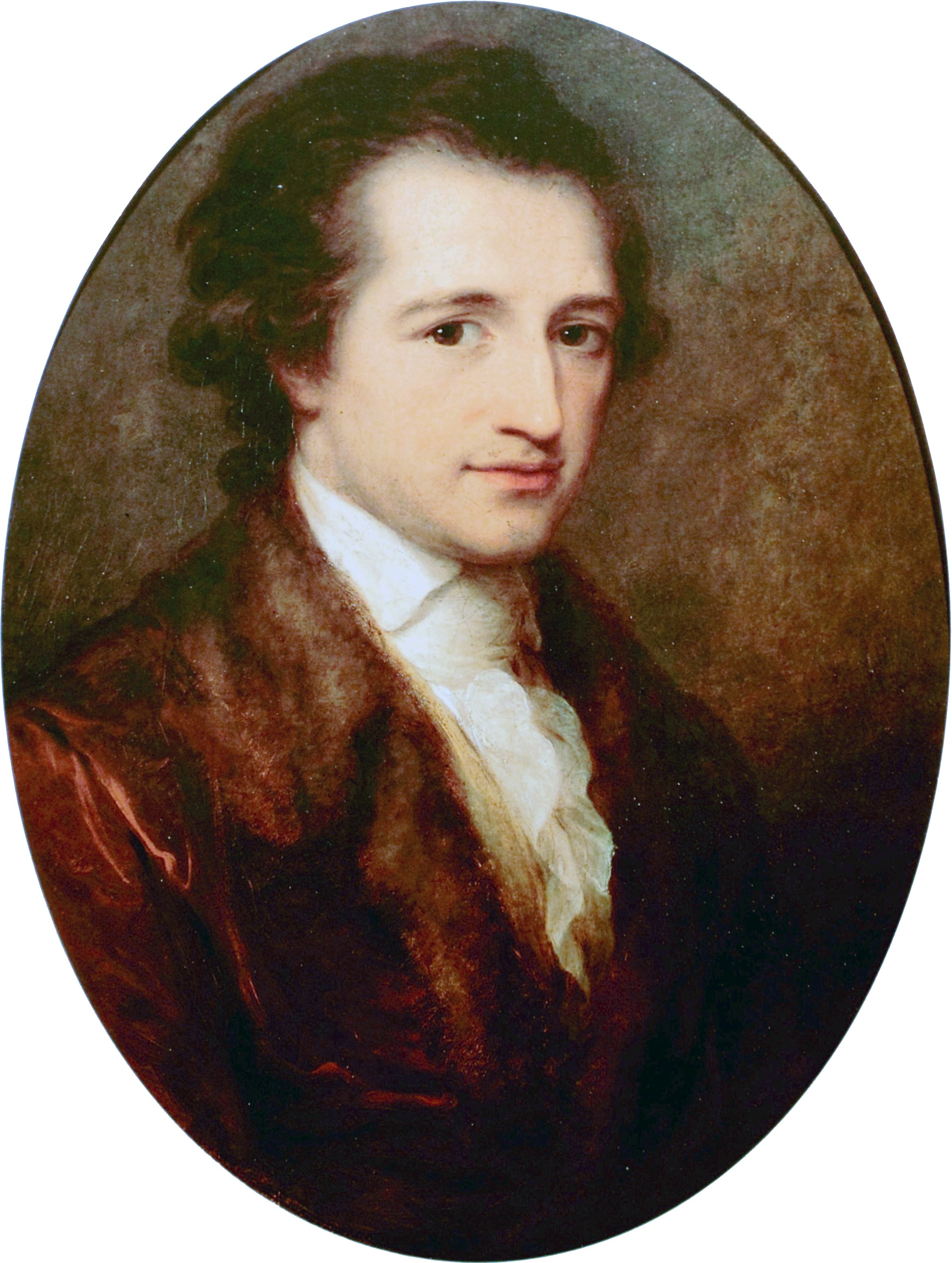
One amusing thing I learned is that Goethe thought the portrait of him by Angelica Kaufmann was too flattering and didn't really look like him. Too bad. I speculated in my post on Wilhelm Meister's Apprenticeship that Wilhelm's adventures were helped because he looked the Goethe of this portrait. Maybe even Goethe didn't look like the Goethe of this portrait...
 
Anyhoo... Safranski's is the biography of Goethe to read at the moment as far as I can tell, and in Dollenmeyer's translation for those of us who aren't up to reading it in German.
 
This post is now in serious tl;dr territory and I didn't even get to those two books of poetry. Maybe I'll come back to Roman Elegies at some point. So why all this Goethe?  (And the other German things on the blog this year: Heinrich Heine, Joseph Roth, Stefan Zweig.) We've got a trip planned to Germany at the end of September--Yay!--and we're concentrating on the southeast, Weimar, Leipzig, Dresden. 
 
Do you like immerse yourself in a place in advance by reading? 

Friday, June 6, 2025

Wanderer's Nightsong (#poem)


Wanderer's Night-song

O'er all the hilltops
Is quiet now,
In all the tree-tops
Hearest thou
Hardly a breath;
The birds are asleep in the trees:
Wait, soon like these,
Thou too shall rest.
 
-Goethe (tr. Henry Wadsworth Longfellow)
 
 
I just finished A. N. Wilson's recent biography of Goethe (pretty good!) and came across this poem. Goethe wrote the poem on the wall of a gamekeeper's hut in the mountains of Thuringia, Germany in 1776. He mentioned it in a letter, and friends copied it out and later published it without his approval. He never thought to include it in one of his own books, but now it's sometimes considered the most perfect lyric in German and was set to music by Schubert.
 
Six months before his death with his health failing, Goethe insisted he could still climb the mountain to where the hut was, and did, and read the poem he'd written there fifty years before.
 
Another version, by John Whaley, an English translator who died in 2005:
 
Over all of the hills
Peace comes anew,
The woodland stills
All through;
The birds make no sound on the bough,
Wait a while,
Soon now,
Peace comes to you.
 
-Goethe (tr. John Whaley)
 
And warum nicht? The German:
 
Wandrers Nachtlied
 
Über allen Gipfeln
Ist Ruh,
In allen Wipfeln
Spürest du
Kaum einen Hauch;
Die Vögelein schweigen im Walde.
Warte nur! Balde
Ruhest du auch.
 
-Goethe

Sunday, April 13, 2025

Anabel Loyd's The Dervish Bowl

"The wandering Jew is a very real character in the great drama of history."
-Sir Edward Denison Ross, Jewish Travellers, 1930

"Arminius Vambéry's father had been a Talmudic scholar and failed businessman in the small town of St Georghen near Pressburg in Austria-Hungary." Pressburg is now Bratislava in modern Slovakia, but Vambéry thought of himself as Hungarian. He was born Hermann Wamburger in 1832--probably. He was never certain. His father died when he was less than a year old and his mother remarried so he had a number of half-siblings, but his stepfather was no more financially successful than his birth father and Vambéry grew up in poverty. He was deeply affected by Lajos Kossuth and the revolt of the Hungarians in 1848 and as a consequence he Magyarized his name to Armin Vambéry. Because of the Russian assistance in putting down the Hungarians at that time, Vambéry became a lifelong Russophobe.

Because of his poverty, his education was spotty. His family was so poor, he said, he was cast adrift at age twelve. But he was very good at languages. At age sixteen he knew Hungarian, Hebrew, Yiddish, Latin, French and German. There was great interest in the relation between Hungarian and Turkic languages at that time and he was able to convince the Academy of Sciences in Budapest he should travel to the East to study that relationship and was awarded a stipend. So, in his twenties, he was in Constantinople, learning Turkish--and teaching Danish to the Danish consul. (Who was actually a Turkish native of German ancestry named von Hübsch.) He also tutored the sister of the future Sultan Abdul Hamid II. He writes a German-Turkish dictionary that becomes popular.

Nor did his Russophobia stop him from learning Russian along the way.

He's made good contacts in Constantinople and could have made a successful career there, but he's young and still imagines greater successes, greater adventures. His stipend was meant to take him further east. He's given the Sultan's tugra, an ornate calligraphic emblem that serves as a sort of diplomatic passport and with that in hand, he travels to Persia. He learns Persian. But where he really wants to go are the Khanates of Khiva and Bokhara, the capital cities of which are both now in Uzbekistan, but were independent countries until they fell to Russian imperialism.

He stays in Tehran for a while because a war in the Central Asian plains makes travel further east unsafe, but eventually he disguises himself as a dervish, a Muslim pilgrim and holy man, purportedly returning from a Hajj to Mecca, and sets off in the company of real dervishes. The year is 1863. 

Crossing the Caspian sea he reaches both Khiva and Bokhara. Muzaffar, the emir of Bokhara, is slightly more moderate than his father Nasrullah, who was famed for simply killing anyone from other countries who might look at him cross-eyed. Vambéry is the rare Westerner who visits and lives to tell the tale.

On his return to Europe he hopes to become a professor of Turkic and Iranian languages, but at first anti-Semitism and his lack of formal academic credentials prevent this. It's suggested he write a book about his travels and get it published in England, which he does; both the book (Travels in Central Asia, available at Project Gutenberg) and Vambéry himself become great successes in England. He's a famous man. 

With this under his belt, he returns to Austria-Hungary and petitions the Emperor Franz Josef to make him a professor, which Franz Josef does, while telling him he won't have any students. Vambéry settles down to life as a professor in Budapest with a few--but at least not no--students. He's on visiting terms with the Sultan Abdul Hamid II and with future Edward VII of England. He meets Queen Victoria several times and travels back and forth between England, his home in Budapest, and Constantinople. He wrote a bunch of books, mostly in German, but also others in English and in Hungarian as well.

He's also a spy, at least so-called, though I'd instead label him a paid intelligence analyst. He writes reports for the English government on the state of affairs in the East, and does what he can to promote friendship between the Ottomans and England. This is popular enough until it isn't, when English policy begins to shift from support of Turkey to accommodation with Russia in the years before World War I. By then the English foreign office is beginning to see him as a bit of a pest (despite his friendship with Edward VII) and amusingly enough Anabel Loyd the biographer kind of does, too.

He dies in 1913.

All in all, a pretty fascinating life, with the one (albeit only the one) great adventure. The book came out last year from Haus Publishing in the U.K.


Thursday, January 25, 2024

Journey to the Edge of Reason

"That he is an important man is shown again and again, but he is a little crazy."
-Oskar Morganstern

Kurt Gödel (1906-1978) is famous as the mathematician who proved that mathematics doesn't quite work. The result is known as the Incompleteness Theorem, and before Gödel's proof, mathematicians assumed anything you could say with elementary mathematics (from 2+2=4, e.g., and on up) could be proven either true or false. It might be hard, it might be impossible for me or you, but it could be done. In 1930 Gödel demonstrated it can't. 

You can create mathematical statements, using math no more complicated than addition and equality, whose truth is unprovable.

Gödel was born in Brno, now in the Czech Republic, but then the largely German-speaking town of Brünn in Austria-Hungary. His father owned a textile factory and was reasonably well off. After the breakup of Austria-Hungary at the end of World War I, financially the Gödels were better off with their money in Czechoslovakia, but when it came time for young Kurt to go to college, in 1924, he went to Vienna, the old imperial capital, which still had the best universities. (It was also becoming uncomfortable in Czechoslovakia for German speakers). 

Budiansky is clearly in love with Vienna. (Understandable.) He spends quite a lot of time on the atmosphere in Vienna, citing figures whose connection to Gödel is pretty non-existent--Joseph Roth, Robert Musil--but whose interest to readers is large. Vienna was Gödel's home for roughly fifteen years, and a large portion of his important work was done there, so it's appropriate enough.

But Vienna was becoming problematic. Gödel wasn't Jewish, but his friends were; as things got worse, the sort of mathematics that Gödel did got labeled 'Jewish mathematics' (What's that?) and after Anschluss, the university wasn't going to allow that sort of math any more. Gödel did a semester as a fellow at Princeton's Institute for Advanced Study when it opened in 1933--Einstein was one of their first hires--and though Gödel didn't much like Princeton, his friends there kept suggesting he come back.

He was subject to paranoid fantasies (though one of his mathematical colleagues was assassinated by a right-wing student, so maybe not entirely paranoid).  His girlfriend Adele was married and under Catholic Austrian law she couldn't get divorced, so the two of them couldn't leave the country as married. Also he was inclined to be apolitical, and was politically naive. 

But after Anschluss in 1938, German law applied in Austria, allowing divorce and remarriage. Kurt and Adele married. Gödel was still sluggish about the need to leave, but after much prodding he did, ultimately taking a full-time position at the Institute for Advanced Study.

And became close friends with Einstein

Through the forties, he continued to do mathematics, working with Oskar Morganstern and John von Neumann. The later years he taught (though he was a terribly shy teacher) and continued to suffer periods of paranoia.

And why was I interested in a biography of Kurt Gödel you might ask?


I read Hofstadter's Gödel, Escher, Bach around when it came out, devoured it more like. It was probably the first serious non-fiction book I read on my own. There were various essays in 2019 for the fortieth anniversary of the book, and I thought about rereading it then, but didn't, but when I saw about the new biography of Kurt Gödel, I was primed to be interested. The biography was well done. The proof of the Incompleteness Theorem is relatively (...?) easy to understand, but Budiansky saves the explanation of that for an appendix, where he does a pretty good job, and otherwise you can read the biography without math.

And am I about to reread Hofstadter? Well, if you look closely you can see a purple bookmark there...


Austria. Could be the Czech Republic, I suppose, but no, not really. Vienna is where it happens. Last year's Austria book for the challenge was another biography of an intellectual who left in the 30s and came to the U.S., Victor Gruen.


Thursday, December 21, 2023

Leah Horlick (#poem)


Guilt

At first, like a head cold--then, three glasses of wine--no five.
Hour twelve, a low-grade fever. Hour fourteen, your whole body is
on fire --

each joint snaps open, heat coiled inside your knees. A reaction to
the measles booster, days before the trip. Fades like a hangover,
then rears

its host of heads again. We chose not
to go to Chișinău -- We have no business

being here anymore. Reroute to Iași. It's the heat,
driving stick, a last hiss,

writing to the chief rabbi

I'm sorry we're not going to make it--
the GPS, the roads, Russian, the car

which really means
I'm sorry we are afraid

-Leah Horlick

I've never had a measles booster, but I had the shingles one not too long ago.  That's about how it was.

Leah Horlick's book Moldovan Hotel came out from Brick Books, a small Canadian press, in 2021. It's her third book of poetry. (I haven't read either of the earlier ones.) She'd gotten a fellowship to go to Romania and Moldova in 2017 to attempt to come to terms with the tragic history of her Jewish family in the region.


Ritual Instructions for Transnistria

Avoid all travel to Transnistria in northeast Moldova.
-travel advisory from the Government of Canada, December 2017

In your right hand, take the ten-hour tourist visa. Form a window with
your left, frame the last functioning hammer and sickle flag. Walk six
times around the last twenty thousand

tonnes of Soviet ammunition. A tanker spills cigarettes out of its side
like a whale and so we say May the memory of this whale be a blessing.
Wash your hands before you dunk your head

beneath the x-ray at the checkpoint, the x-ray that pretends not to notice 
you. Rabbi, is there

a blessing for the border?

A blessing for the border--

May God bless and keep the borders, seen and unseen, far away from us.

-Leah Horlick

Transnistria is that breakaway region in Moldova (across the Dniester River) that's propped up by Russia. 

She says in an afterword she lifted that final line from Fiddler on the Roof, but I knew that. 😉("Is there a proper blessing for the Tsar?" "May God bless and keep the Tsar...far away from us.")

The title poem is probably the best, but too long to quote. Interesting stuff.


Saturday, November 11, 2023

Rebecca Solnit/Orwell's Roses (#NonficNov)

"In the spring of 1936, a writer planted roses."

That's the opening line of Rebecca Solnit's most recent book Orwell's Roses, and the writer-slash-gardener is George Orwell. Orwell wrote about the roses (and also the fruit trees and gooseberries he planted) in his essay 'A Good Word for the Vicar of Bray' of 1946. Solnit calls it 'a triumph of meandering that begins by describing a yew tree in a Berkshire churchyard.' It takes one to know one: Solnit is a champion of the meandering essay herself.

Back to the Vicar of Bray for a moment. He's not a hero: what he's famous for is the slipperiness of his politics:
And this is law, I will maintain,
Until my Dying Day, sir,
That whatsoever King may reign,
I will be the Vicar of Bray, sir! 

Still, the Vicar planted that yew tree. Orwell:

"An oak or a beech may live for hundreds of years and be a pleasure to thousands or tens of thousands of people before it is finally sawn up into timber. I am not suggesting that one can discharge all all one's obligations towards society by means of a private re-afforestation scheme. Still, it might not be a bad idea, every time you commit an antisocial act, to make a note of it in your diary, and then, at an appropriate season, push an acorn into the ground."

Or roses. 

Solnit was in England for a book tour and was interested to see what was left of Orwell's plantings. Only the roses survived.

"There are many biographies of Orwell, and they've served me well for this book, which is not an addition to that shelf. It is instead a series of forays from one starting point, that gesture whereby one writer planted several roses. As such, it's a book about roses..."

An interesting topic for a meander.

So many fascinating things: Emma Goldman, the photographer Tina Modotti, Stalin and lemon trees. Columbia is the source for 90% of North America's commercial cut roses and is infamous for its terrible labor practices. Solnit manages to visit a rose farm there. It's not a long book, but it's fascinating and I won't even try to tell you all the things in it.

One of her main themes is the frequent puritanism of the left. Orwell is sometimes absorbed into this. Is he a dour political writer who can only tell us the terrible things are going to happen, the terrible things that are happening? Maybe not just. Turns out nature is important in 1984 and is written about well. This leads her to Emma Goldman, the anarchist, and Tina Modotti, the photographer and Communist. 

It is also about what a political essayist can and should do: in Solnit's case in this book, feminism, labor issues, the creeping return of totalitarianism, climate change.

Pretty great stuff. It's the fourth I've read of her twenty-five or so books. (River of Shadows, A Field Guide to Getting Lost, The Faraway Nearby and now this.) Right now it's my favorite, and is likely to stay so at least until I read the next one. 

    "Orwell's signal achievement was to name and describe as no one else had the way that totalitarianism was a threat not just to liberty and human rights but to language and consciousness, and he did it in so compelling a way that his last book casts a shadow--or a beacon's light--into the present. But the achievement is enriched and deepened by the commitment and idealism that fueled it, the things he valued and desired, and his valuation of desire itself, and pleasure and joy, and his recognition that these can be forces of opposition to the authoritarian state and its soul-destroying intrusions.
    The work he did is everyone's job now. It always was."


Monday, November 6, 2023

Will Hermes' Lou Reed: The King of New York (#NovNonFiction)

"A hustle here and a hustle there/New York City is the place where..."

Lewis Allan Reed was born in Brooklyn in 1942, but mostly grew up further out on Long Island. He went on to, you know, make a bunch of records.

And take a lot of drugs. 

Will Hermes' biography Lou Reed: The King of New York was released at the beginning of last month.

Reed grew up in a practicing Jewish family; his father was a successful accountant. His mother stayed at home; he had a sister five years younger. He cut his first record, a single ("So Blue/Leave Her for Me") in high school, at age sixteen, with a band called the Jades. It had some local success, got played on Murray the K's radio show, but quickly faded. But not a bad beginning.

He may have had a troubled childhood--he often said so himself, though little that Lou Reed says about his life can be trusted: he told the musician Lenny Kaye once, "I created Lou Reed. I have nothing even faintly in common with that guy, but I can play him pretty well." His sister said that while Lou was a bit fragile as a child, theirs was a quite normal household.

In any case something went a bit off the rails. He wanted to be in Manhattan for college, but at the end of his first semester at NYU, he had a nervous breakdown, or something, and moved back with his parents, where he underwent a course of electroconvulsive therapy. Was it anxiety, depression? Or was it--as Reed sometimes said--his homosexual impulses? (Though his sister says that was not the cause for his ECT.) Though it seems astonishing now, ECT was considered an ordinary enough treatment at the time. After those horrors, he started college again at Syracuse in upstate New York.

There he met Delmore Schwartz, once a poetic enfant terrible, but by then a drunk, and mostly just terrible. Still he was impressive to the young Lou Reed, who was interested in doo wop, R&B, rock, and popular music in general, but also in literature and poetry. Schwartz became the first of Reed's great mentors.

After Reed graduated from college, he worked as a songwriter for Pickwick Records in NYC, a sort of Brill Building outfit, where his biggest success was a dance track 'The Ostrich'. He also met the avant-garde violist John Cale. The two of them became the core of the Velvet Underground; the classic lineup was completed with Sterling Morrison on guitar and Maureen ('Moe') Tucker on drums. The band caught the eye of Andy Warhol, who was--ahem!--a famous enough guy, though maybe not the best music promoter. In any case Warhol goes on to become the second of Reed's great mentors. In the late 60s, the Velvet Underground made some great records, famous now, but they hardly sold at the time. 

The commercial breakthrough, Transformer, with 'Walk on the Wild Side', came out in 1972, his second solo album.

Did I mention drugs? Reed was probably already injecting in high school. Somewhere early on he caught hepatitis from shared needles. Heroin was an early favorite, one he shared with John Cale, and the topic of several early VU songs. Later he did mostly amphetamines. This was partly the influence of Warhol, who famously emphasized work ethic and did speed to keep going. There were various reasons why Reed and Cale couldn't get along--Reed's ferocious difficulty as a person being the main one--and that version of the VU ended in 1968. But Cale also suggests that while he was still doing heroin, Reed was then on speed. A cultural difference.

Reed also seemed to be genuinely bisexual. He had long term relationships with both men and women. He may have slept with Warhol--some say yes and some say no--though Hermes thinks not on the whole. Reed's longest homosexual relationship was with the trans woman Rachel Humphries, and went for about 5 years in the late 70s. It fell apart when Reed decided he finally had to get clean of drugs. (He meant also to get free of alcohol, but doesn't seem to have ever succeeded entirely with that.)

Hermes' book speeds up after the 70s. His previous book was about NYC music in the 70s, so that's his main period of interest. But it's also the case that established success in an artist can be a little dull in a biography, so he may have chosen to spend less time on that. His second marriage--to Sylvia Morales Reed--helped him sober up and was the inspiration for a number of his 80s solo albums (the period I was hearing him). But it broke up when she wanted a kid and he didn't. He later married the avant-garde musician Laurie Anderson, who survived him. 

There's enough testimony that Lou Reed could be sweet and caring that it's probably even true, but it certainly wasn't always, and he could be terribly difficult. Insecurity? Amphetamines? Alcohol? Perfectionism? Rockstar entitlement? Who knows? Something could make him turn nasty. Reed between the hepatitis, the drugs, and the alcohol did enough damage to his liver he needed a transplant, which he got in 2013. It seemed to have worked for a couple of months, but then his body rejected it, and he was dead in October of that year. Hermes quotes a hilarious bit from the Onion that was true even when it appeared in the optimistic months, but then sadly was even more true:
New Liver Complains of Difficulty Working with Lou Reed

"It's really hard to get along with Lou--one minute he's your best friend and the next he's outright abusive,' said the vital organ, describing his collaboration with the former Velvet Underground frontman as "strained at best." "He just has this way of making you feel completely inadequate."
Anyway, Hermes' biography was solid, better on some periods than others (of course,) best of all on the late sixties through the seventies. I don't know that it will make any new converts, but if you were already a fan...


...I think you'll enjoy it.


It's the second week of Nonfiction November and the prompt is, How do I choose which non-fiction to read? I'd say it's generally by topic, as was this. I don't remember where I first saw mention of the biography, but since that review wasn't a pan, and I knew was interested in the subject, I put it on my library holdlist. I've read a few other music biographies, though it's not a large category for me. General-audience literary criticism is a perennial for me, history--a lot of Ukraine and eastern Europe lately, alas--regularly appears by my reading chair, some (non-technical) philosophy. Some books related to professional concerns: computers, finance, containerized shipping. Cookbooks.

I also then to fix on particular authors. I read Robert Gerwarth's most recent, November 1918, because I'd enjoyed his earlier book. I'm likely to read the new Christopher Clark soon. I might also read that earlier Will Hermes. And the next non-fiction book I'll read will score in two categories: it's the latest by Rebecca Solnit, whom I quite like, and it's about her engagement with George Orwell, so literary criticism.

Project Gutenberg also has some interesting things, and I sometimes just read from there, mostly because it's so simple to come by, and I want something for the eReader.

I'm not completely opposed to judging a book by its cover 😉 though I certainly wouldn't call the cover of this Lou Reed biography much of an enticement...but it *has* gotten harder to browse bookstores: it's a pretty good ways now for me to get to a good new bookstore, when ten years ago there was one a block away. (I should be buying fewer books anyway...) In any case more books in general, and non-fiction in particular, is likely to come from the library where I just order it up from the website and it appears at my local branch magically, after I've just read about it at somebody's blog. I'm expecting to request a whole bunch of books at the end of this month...

Thanks to Frances at Volatile Rune for hosting this week!

Tuesday, October 10, 2023

Obelists at Sea (#Mystery)

 "An obelist is one who harbours suspicions."

Or so says C. Daly King. It's a word of his own invention.

In 1932 the S. S. Meganaut is on the run between New York and France. In the evening in the ship's smoking room, the lights fail for a moment, there's the sound of a shot, and when the lights come back up Mr. Smith, American millionaire, is dead, shot, and Mr. de Brasto, shady lawyer, is holding a smoking gun. Open and shut case, right?

Ha!

And that's despite the fact that Smith had just been persecuting de Brasto over an innocent shipboard game. The Meganaut (think the Queen Mary, which carried 2100 passengers and 1100 crew) has two detectives aboard, but they were prepared for the occasional brawl or sneak thief, not for an actually mysterious murder. 

But there's also four psychologists aboard on their way to a European conference, and the captain quickly turns to them for assistance. They each produce a suspect in accordance with their psychological theories: a behaviourist, a Freudian of sorts, an early proponent of a lie detector device, etc. All their suspects prove to be red herrings. 

So who does solve it? (Because it does get solved.) Well, that's part of the mystery, too...

It's a pretty good Golden Age mystery, it moves along well, and prides itself on its fair-play cluing; the last section is 'The Clue Finder'--"Do not open until you have finished the story." I have to admit to not seeing enough of those clues to know who the killer was.

C. Daly King was an American psychologist, who wrote a text book with the Marstons (they of Wonder Woman fame). His attitude towards the four psychologists is curious: he allows them space to be serious, but still is a bit mocking of their various theories. And he gives them silly names: the behaviourist is Frank B. Hayvier, for example. The last psychologist is perhaps the most respected; he considers all the theories useful, but none of them complete. His name is Professor Knott Coe Mittle. (Ha, ha.) But even he fails to produce the killer. I will admit to finding the names a bit of a distraction.

This is the first of the Obelist series, and King went on to write several more, plus he started another series later. They've been out of print for years, until Otto Penzler Classics brought this one out again earlier this year, with an introduction by Martin Edwards. Michael Dirda's review in The Washington Post (where I first saw it mentioned) suggests one of the later Obelist ones is even better, so hopefully they don't stop with just the first.

For the Vintage Mystery challenge.


Vintage Mystery, Gold, Boat: I'd call that a ship myself, but shhh. I was once told you can put a boat on a ship, but you can't put a ship on a boat, and that was the difference, but we'll just ignore that for now...

Monday, October 2, 2023

Sunday Salon


Book-ish

The second book, Sins for Father Knox, in Josef Škvorecky's Lt. Boruvka mystery series got a post on the blog. Good, a fun premise, but not as good as the first in the series.

post with a couple of Emily Dickinson poems. 

While I was waiting for Rebecca Solnit's Orwell's Roses to arrive from the library, I read her earlier The Faraway Nearby of 2013. It's the third of her books I've read and I thought it was awfully good; it may have become my favorite. (Though River of Shadows is very good, too.) I started writing a long post before deciding I wasn't competent to do so... But it involves her mother's Alzheimers, Wile E. Coyote, Frankenstein, Iceland, and apricots. In what's not a very long book.

Orwell's Roses did finally arrive, so I should finish that soon, too. But I can see a binge coming on. Which others should I read?

Then I read the third Persis Wadia mystery, The Lost Man of Bombay, which came out last year. They're set in the early 1950s, and Persis, a Parsee, is the first female detective on the Bombay police force. Pretty entertaining, but the first one in the series remains the best, I think. The next is supposed to come out later this year or early next (Sources seems to differ) and I'm sure I'll read it when it's available. But in the meantime I was wondering about his other series, Baby Ganesh Detective Agency. Descriptions make it seem a little cutesy, but has anybody read it?

On an altogether more serious note...it's the week of the Nobel Prize announcement. (Well, probably. We'll learn tomorrow if they're delaying for a week.) I don't actually have a favorite for this year, but I'm always excited to hear what they pick.

Movies

Seeing The Widow Clicquot a couple of weeks ago reminded me of the Cyrano that came out in 2021. (Haley Bennett was the widow Clicquot in that movie; she plays Roxanne in Cyrano.)


It's Peter Dinklage who plays Cyrano, and that's what made me want to see the movie, but 2021 was still a tough time to see movies and we didn't.

Dinklage as the person who feels he can never win the beautiful girl is a natural, and I find Dinklage a pretty great actor. It might be surprising that he was good in duelling scenes, but not entirely: he pulled off the battle scenes in Game of Thrones very successfully. The duels in this are more balletic than the Battle of Blackwater Bay, but still. In fact the choreography in Cyrano was in general a delight. 

The movie originated in a musical and that was the problem, I thought. (In the introduction to his translation Anthony Burgess says, "I had always had my doubts about the musicalization of Cyrano de Bergerac.") The songs felt pretty unmemorable, and the two best songs were the poignant 'Wherever I Fall' by the soldiers in the battle, and the swaggering 'What I Deserve' by the villain-ish Duc de Guiche; in other words none of the songs of the principals, Cyrano, Roxanne, and Christian, were particularly interesting. They also took out some of the best lines. I'm sure Cyrano's great 'No thank you'/'Non merci' speech was shortened; the film also dropped Roxanne's great line near the end, "I never loved but one man in my life/Now I must lose him twice." [Anthony Burgess' translation.]

So while it was OK, José Ferrer and Gerard Depardieu have nothing to worry about. I think I would have preferred the same three actors (Peter Dinklage, Haley Bennett, Kelvin Harrison, Jr.) doing Rostand's actual text. 

Greek Salad


The farmer's market still has tomatoes; the oregano in the herb garden still has punch...

Hope you've had a great week!